
AMERICAN allies of President Donald Trump have defended him to an Israeli public anxious about a US interim deal with Iran, and White House criticism that together appeared to signal fissures in Israel’s decades-old alliance with Washington.
The US-Israeli relationship has been on a roller coaster, from the early confidence they shared after their joint attack on Iran to public disagreements between Trump and Prime Minister Benjamin Netanyahu over how to end the four-month-old war.
Netanyahu and many other Israelis see a risk that Trump’s Memorandum of Understanding (MoU) with Iran will empower a state they regard as their deadliest enemy and constrict their ability to respond to threats from Iran-backed Hezbollah in Lebanon.
They sense the US alliance, long the bedrock of Israel’s strategic approach, is under strain, as opinion polls show Americans increasingly unhappy with Israel and their strongest champion in Washington appears to be turning away.
“The United States and Israel have an unbreakable bond,” Mike Huckabee, the US Ambassador to Israel, said on Sunday after acknowledging there was an “enormous level of anxiety about the relationship.”
He spoke at the JNS International Policy Summit in Jerusalem, where concerns about the state of the US-Israel alliance dominated many of the discussions.
Alongside their concerns about the wording of the Iran deal, Israelis worry about Trump’s insistence on Israel agreeing a ceasefire with Hezbollah in Lebanon and his language responding to Netanyahu’s resistance to those agreements.
In recent weeks, Trump has called Netanyahu “fucking crazy,” lectured Israel that “you don’t have to knock an apartment down every time you’re looking for somebody” and publicly pondered asking Syria to replace Israeli troops in Lebanon.
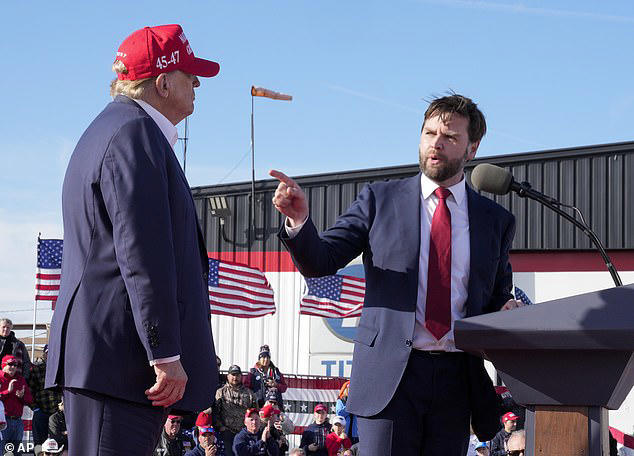
Vance also struck a more critical tone, saying “Trump is the only head of state in the entire world who is sympathetic to the nation of Israel at this moment in time,” adding later that not all criticism of Israel should be dismissed as anti-semitism.
The fact such sharp views are emanating from Trump’s Republican Party is especially worrying for many Israelis, with US Democrats far more vocally critical of Israel than in previous years.
While large majorities of Republicans 50 and older view Israel positively, younger conservative Americans have grown more critical, a Pew Research Center poll from late March showed.
Some 57 per cent of Republicans aged 18 to 49 have an unfavourable opinion of Israel, up from 50 per cent a year previously.
Many Americans, including prominent Democratic politicians, were outraged by the scale of death and devastation in Israel’s military campaign in Gaza after the deadly Hamas attack of October 7, 2023, on Israeli communities and the taking of hostages.
Israel has also faced criticism over the joint decision to launch the war on Iran, a conflict that is deeply unpopular in the US, including among Trump’s conservative base.
Until recently, Trump had been seen in Israel as its strongest-ever White House ally after his decision in his first term to recognise Jerusalem as Israel’s capital and Israeli sovereignty over the occupied Golan Heights and his leading diplomatic role securing the release of hostages last year.
Two Israeli officials familiar with Netanyahu’s thinking said the prime minister was not concerned that comments by Trump and Vance indicated any meaningful US policy changes such as slower arms deliveries.
Netanyahu believed the comments might be partly geared towards assuaging voters ahead of US midterm elections in November amid growing frustration over Israel and the war, said the officials who spoke on condition of anonymity.
The anxiety in Israel has led some prominent figures to say it is time for the country to envisage a future without strong US support and to further build up its own military and technological capabilities.


