
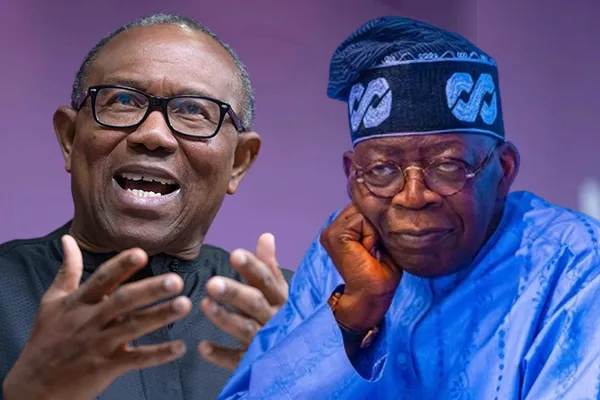
THE Presidency, on Monday, June 22, dismissed a call by the Labour Party (LP) presidential candidate in the 2023 general elections, Peter Obi, for President Bola Tinubu to resign, describing the demand as “childish, hollow” and an attempt to distract from the administration’s achievements in governance, security and the economy.
Obi had urged Tinubu to consider resigning from office, arguing that his administration has failed to deliver on key promises made to Nigerians and has presided over worsening economic hardship and insecurity.
Obi, while reacting via his X handle to the resignation of British Prime Minister, Stir Starmer, had described it as an example of political accountability and leadership responsibility.
In a statement, titled, ‘Owning Up to Leadership Failures and Political Responsibility, the former Anambra State governor said leaders must be willing to accept responsibility when they fail to meet the expectations of the people.
He stated that Starmar’s decision to step down followed public dissatisfaction over economic stagnation, the rising cost of living and unmet campaign commitments.
Drawing parallels with Nigeria, he recalled that Tinubu had, before assuming office, repeatedly demanded accountability from previous administrations and called for the resignation of former President, Goodluck Jonathan, over insecurity and economic challenges.
He noted that during the 2023 election campaign, Tinubu promised improved electricity supply, stronger anti-corruption measures, enhanced security and better welfare for Nigerians, arguing that the situation had deteriorated since then.
“Electricity supply remains unreliable, insecurity has intensified in many parts of the country, kidnappings persist and economic hardship has deepened rather than eased,” Obi stated.
He maintained that similar concerns exist across critical sectors, including infrastructure, transportation and anti-corruption efforts, which he said have witnessed little improvement; hence his call on Tinubu to resign, in demonstration of accountability and a step towards strengthening democratic responsibility.
He argued that such would help establish a political culture where leaders are held accountable for their performance and where public office is treated as a trust, rather than an entitlement.
The presidential candidate of the National Democratic Congress (NDC) in next year’s general elections said ending impunity in governance remained essential to building a more prosperous and responsible society.
“Only by embracing accountability can we secure a better future for the next generation and build the New Nigeria that is possible,” Obi noted.
However, Tinubu’s Special Adviser on Information and Strategy, Bayo Onanuga, in a statement, argued that Obi’s comparison of Nigeria’s political system with the United Kingdom’s parliamentary model was fundamentally flawed, insisting that his boss was elected to a constitutionally-guaranteed four-year tenure.
The presidential aide said the All Progressives Congress (APC) recent victories in the governorship election in Ekiti State, as well as senatorial elections in Nasarawa, Enugu and Ondo states reflected continued public confidence in the President and his party.
“Peter Obi should wait until the 2027 presidential election to test the popularity of Tinubu rather than attempting to use social media to pressure an elected President out of office,” the statement said.
He stated that Tinubu inherited longstanding security challenges, but had recorded measurable successes through intensified military operations, improved intelligence gathering and increased investment in security infrastructure.
Onanuga claimed that thousands of terrorists had been neutralised, hundreds of abducted victims rescued and security operations expanded with the deployment of advanced technology, drones and the appointment of a Special Adviser on Homeland Security.
He said Obi ignored the achievements of the Tinubu administration’s economic reforms and international recognition of Nigeria’s policy direction, saying since Tinubu assumed office in 2023, Nigeria’s economy has recorded positive quarterly GDP growth, sustained trade surpluses and increased foreign reserves, which has risen above $50billion.
On electricity supply, Onanuga said Tinubu never promised 24-hour power immediately upon assuming office, but pledged to improve electricity access and eliminate estimated billing, pointing to the signing of the Electricity Act, which grants states greater authority over electricity generation, transmission and distribution, alongside the rollout of millions of prepaid meters and expanded investment in off-grid solar solutions for schools, hospitals and markets.
While acknowledging the high cost of living, Onanuga attributed global inflationary pressures to international geopolitical tensions, particularly developments in the Middle East, from which Nigeria was not insulated from their impact.


