
*Iran Apologises To Neighbours, As Saudi Warns Of Possible Retaliation
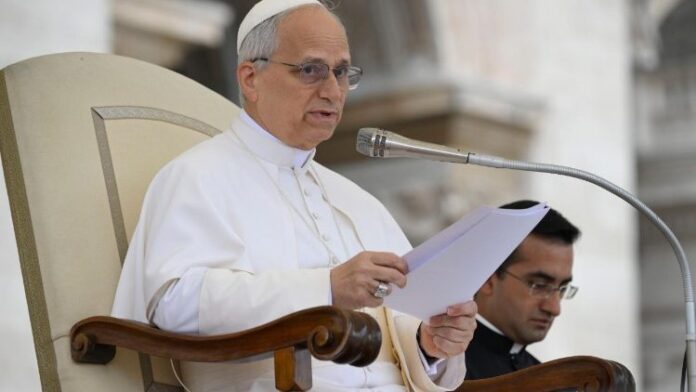
THE Catholic Pontiff, Pope Leo, on Sunday, March 8, said deeply troubling news continued to emerge from Iran and across the Middle East, urging an end to the violence and renewed efforts to open space for dialogue.
As fighting escalated on the ninth day of the U.S.-Israeli assault on Iran, the first U.S. Pope warned that the conflict was fuelling fear and hatred and raised concerns that it could spread further.
“Alongside the episodes of violence and devastation and the widespread climate of hatred and fear, there is also growing concern that the conflict could spread and that other countries in the region, including dear Lebanon, could once again sink into instability.
“Let us raise our humble prayer to the Lord that the roar of bombs may cease, that weapons may fall silent, and that space may be opened for dialogue in which the voices of peoples can be heard,” Reuters quoted the pope as saying at the Angelus prayer in St. Peter’s Square.
The Vatican’s top diplomat had warned on Wednesday, March 4, that the U.S.-Israeli strikes undermined international law and said nations did not have a right to launch “preventive wars,” an unusually direct criticism of the military campaign.
Meanwhile, Saudi Arabia has told Tehran that while it favours a diplomatic settlement to its conflict with the U.S. and Israel, continued attacks on the kingdom and its energy sector could push Riyadh to respond in kind.
The message, said to have been conveyed before a speech on Saturday, March 7, in which Iranian President, Masoud Pezeshkian, apologised to neighbouring Gulf states for Tehran’s actions, an apparent attempt to defuse regional anger over Iranian strikes that hit civilian targets.
Two days earlier, Saudi Foreign Minister, Prince Faisal bin Farhan, spoke to his Iranian counterpart, Abbas Araqchi, and set out Riyadh’s position with clarity, saying Saudi Arabia was open to any form of mediation aimed at de‑escalation and a negotiated settlement, thereby underlining that neither Riyadh nor other Gulf states had let the U.S. use their airspace or territory to launch airstrikes on Iran.
But Prince Faisal was also quoted as saying that if Iranian attacks persisted against Saudi territory or energy infrastructure, Saudi Arabia would be forced to permit U.S. forces to use their bases there for military operations, warning that Riyadh would also retaliate if attacks on the kingdom’s critical energy facilities continued.
It was gathered that the kingdom had remained in regular contact with Tehran through its ambassador since the U.S. and Israeli military campaign against Iran began on February 28, following the collapse of talks on Iran’s nuclear programme.
Pezeshkian said Iran’s temporary leadership council had approved suspending attacks on nearby countries, unless an attack on Iran came from those nations, adding: “I personally apologise to neighbouring countries that were affected by Iran’s actions.”
To what extent Pezeshkian’s remarks signal a change is unclear, as there were further reports of strikes directed at Gulf states on Saturday.
Also, in a sign of possible divisions within Iran’s leadership, Khatam al-Anbiya Central Headquarters, the unified combatant command of the Iranian armed forces, said in a statement afterwards that U.S. and Israeli bases and interests across the region would remain targets.
The command said Iran’s armed forces respected the sovereignty and interests of neighbouring states and had not taken action against them so far, but that U.S. and Israeli military bases and assets on land, at sea and in the air across the region would be treated as primary targets and face “powerful and heavy” strikes by Iran’s forces.
U.S. President, Donald Trump, said in a social media post that Iran had “apologised and surrendered to its Middle East neighbours, and promised that it will not shoot at them anymore.”
“This promise,” he noted, “was only made because of the relentless U.S. and Israeli attack.”


