
*Links Surge In Nigeria’s Terror Attacks To Exit From Niger, Chad
THE United States(U.S.) has blamed the rising attacks by terrorist groups in Nigeria and other African countries on its forced exit from bases in some neighbouring countries, including Niger and Chad, saying its inability to effectively monitor the activities of the violent organisations has aggravated the situation.
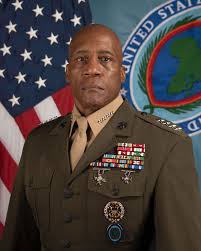
Commander of the US Africa Command (AFRICOM), US Marine Corps, Gen. Michael Langley, speaking at the weekend during a digital press briefing after the “African Chiefs of Defence Conference” in Kenya, described the recent attacks in Nigeria and other parts of the Sahel as deeply worrisome.
Established in 2007, AFRICOM is responsible for US military operations, partnerships and security cooperation across the African continent, excluding Egypt.
Its primary mission is to strengthen the defence capabilities of African nations, support humanitarian and disaster relief efforts, and counter transnational threats, including terrorism, piracy and illicit trafficking.
In recent years, AFRICOM has faced growing challenges, as African nations re-assessed foreign military partnerships and geopolitical competition increases, particularly from Russia and China.
Nigeria has witnessed escalation in terrorist activities in recent weeks, especially in the Northeast, where Boko Haram and its faction, the Islamic State West Africa Province (ISWAP), have intensified their attacks.
But the US top military officer said the absence of his country’s intelligence and counterterrorism support, which had previously helped monitor and disrupt extremist networks across the Sahel, might have created security gaps that terrorist groups were now capitalising on.
He said: “I’ll just say that since we left Niger in September of last year, we’re observing a rise in attacks by violent extremist organisations, not only in Niger, but across the Sahel to include Nigeria as well as going into Burkina Faso and Mali.
“Now, this increase is measurable by both frequency and complexity of these attacks driven by persistent and socio-economic grievances and the proliferation of weapons and increased capable terrorist groups across the board.
“So, unfortunately, with our withdrawal from the region, we have lost our ability to monitor these terrorist groups closely, but we continue to liaison with partners to provide what support we can.”
Langley noted that the incidence of violence is not only troubling, but the scale of brutality that comes with them have also become concerning, adding: “The recent attacks in Nigeria and across the Sahel are deeply concerning,” Langley said, stressing, “The scale and brutality of some of these incidents are really troubling.”
He said the US was monitoring the situation closely and sharing intel with the Nigerian military and regional partners in the area of security, adding: “We are committed to supporting one of the most capable militaries in the region, in Nigeria.
“Unfortunately, with our withdrawal out of the region, though, we have lost some of our ability to monitor terrorist attacks closely, but we continue to liaison with our partners to provide what support we can.”
He, however, insisted that every nation must make independent decisions regarding their security, including partnerships, pointing out that the US respects sovereignty.
On why the US was not actively assisting Nigeria to fight terrorism, Langley said: “So now, as I said before, we respect nations’ sovereignty and only go where we’re asked as long as it aligns with US national security objectives.
“I was just in Nigeria back in November, where I got to see first-hand how we actively work with and support Nigerian defence objectives.
“During my entire Command, I’ve been on a campaign of learning, and when I was in Nigeria, I sat across from our Nigerian partners to hear how we can assist. Because again, the United States, we act with our partners, and in this particular case with Nigeria, we work together to combat Boko Haram and ISIS West Africa to promote regional security.
“Nigeria is a strategic African partner, and we have a long history of providing critical material and training support to Nigeria. It extends across from military sales, defence articles and also training to go along with the foreign military sales.
“That’s a great example of how the law of armed conflict education goes with military training, and also, we’ve had some intel sharing with them.
“So Nigeria is a leading supporter and previous host of ‘Obangame Express,’ as well highlighting their role as a leader in the region.”
Langley stated that terrorist factions in the Sahel region had increased their presence so much in the past three years that they soon might be able to launch attacks within America, if not tamed, adding: “Today, I want to emphasise the US AFRICOM’s strategic approach.
“I’ve been charged by the Secretary of Defence, Pete Hegseth, to mitigate threats to the US homeland posed by terrorist organisations, the most dangerous of which are, unfortunately, right here on the African continent.
“The Sahel, that’s where we consider the epicentre of terrorism, Mali, Burkina Faso and Niger, are confronted with this each and every day; they’re in crisis.
“The terrorist networks affiliated with ISIS and al-Qaeda are thriving, particularly in Burkina Faso, where the government has lost control of wide swaths of territory across their sovereign nation.
“Attacks are resurging in the Lake Chad region as well, and extremist groups are growing more aggressive.
“One of the terrorists’ new objectives is gaining access to West Africa coasts. If they secure access to the coastline, they can finance their operations through smuggling, human trafficking and arms trading. This puts not just African nations at risk, but also increases the chance of threats reaching the US shores.”
The US military chief said that was why the coastal partners were fighting fiercely along their northern borders to prevent terrorist expansion, assuring that AFRICOM is standing with them.
“My second charge from Secretary Hegseth is to confront the military ambitions of the Chinese Communist Party on the continent.
“While the US works to build transparency and respectful partnerships, China continues to pursue access to Africa’s resources, often ignoring long-term sustainability.
“So, we’re taking a different approach, one that links security with trade. We know private investment cannot thrive without safety. That’s why AFRICOM’s role is so vital: We are not just helping build military capacity for African nations, we are helping build the stability that underpins both African and American prosperity.”


