
*Top German, British Diplomats Travel To Israel In Bid To Limit Crisis
*Kremlin Says Middle East Tensions Benefit No One
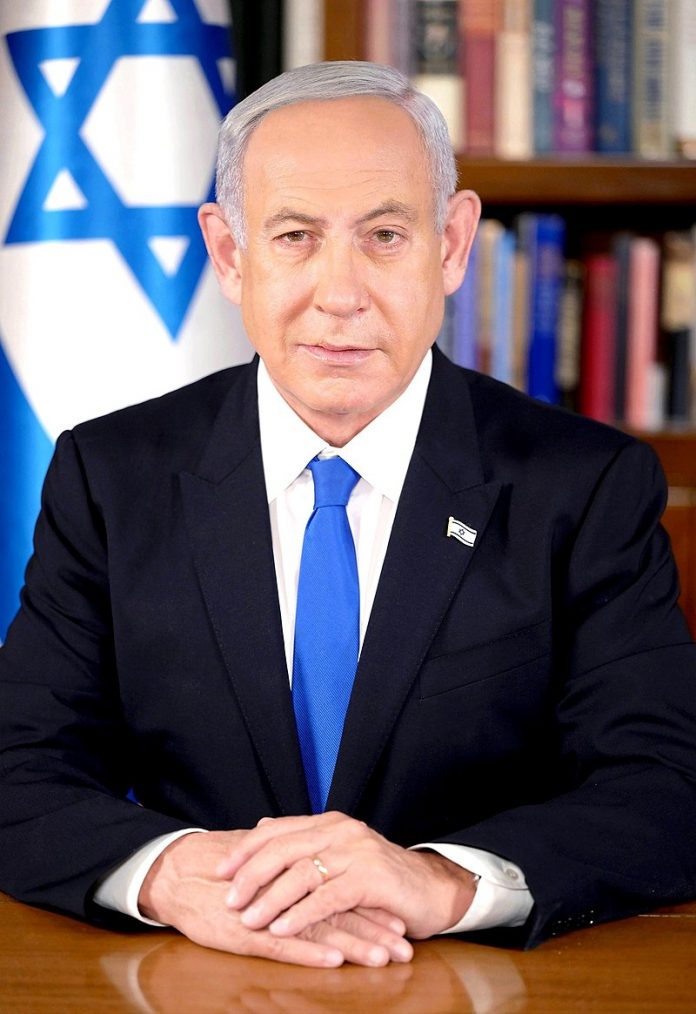
ISRAELIS await word on how Prime Minister Benjamin Netanyahu would respond to Iran’s first-ever direct attack, even as international pressure for restraint grew amid fears of an escalation of conflict in the Middle East.
Netanyahu on Monday, April 15, summoned his war cabinet for the second time in less than 24 hours to weigh a response to Iran’s massive weekend missiles and drones attack, a government source said.
While the attack caused no deaths and little damage, thanks to the air defences and counter-measures of Israel and its allies, it has increased concerns that violence rooted in the Gaza war is spreading and fears of open war between the long-time foes.
Israeli military Chief of Staff, Herzi Halevi, said on Monday that “this launch of so many missiles- cruise missiles and drones- into Israeli territory will be met with a response,” but gave no details.
Iranian Deputy Foreign Minister, Ali Bagheri Kani, told state television on Monday night that Tehran’s response to any Israeli retaliation would come in “a matter of seconds, as Iran will not wait for another 12 days to respond.”
But the prospect of Israeli retaliation has alarmed many Iranians already enduring economic pain and tighter social and political controls since protests in 2022/23.
Iran launched the attack in retaliation for an airstrike on its embassy compound in Damascus on April 1 blamed on Israel, but has signaled that it did not seek further escalation.
United States (US) President, Joe Biden, told Netanyahu at the weekend that the US, which helped Israel blunt the Iranian attack, would not participate in an Israeli counter-strike.
Since the war in Gaza began in October, clashes have erupted between Israel and Iran-aligned groups based in Lebanon, Syria, Yemen, and Iraq.
Israel said four of its soldiers were wounded hundreds of metres inside Lebanese territory overnight, the first known Israeli ground penetration into Lebanon since the Gaza war erupted, although it has traded fire with the Lebanese Hezbollah militia.
“We’re on the edge of the cliff and we have to move away from it,” Josep Borrell, the European Union’s Foreign Affairs chief, told Spanish radio station, Onda Cero.
French President, Emmanuel Macron, German Chancellor, Olaf Scholz, and British Foreign Secretary, David Cameron, made similar appeals.
Washington and United Nations (UN) Secretary General, Antonio Guterres, also have called for restraint.
White House national security spokesman, John Kirby, declined on Monday to say if Biden had urged Netanyahu in talks on Saturday night to exercise restraint in responding to Iran.
“We don’t want to see a war with Iran. We don’t want to see a regional conflict,” Kirby told a briefing, adding that it was for Israel to decide “whether and how they’ll respond.”
Israeli Foreign Minister, Israel Katz, said he was “leading a diplomatic attack” alongside Israel’s military response, writing to 32 countries to place sanctions on Iran’s missile programme and proscribe its Revolutionary Guards Corps as a terrorist organisation.
US Treasury Secretary, Janet Yellen, said Iran’s actions threatened stability in the Middle East and could cause economic spillovers.
The US would use sanctions and work with allies to keep disrupting Iran’s “malign and destabilising activity,” she added.
However, some analysts said the Biden administration was unlikely to seek to sharpen sanctions on Iran’s oil exports due to worries about boosting oil prices and angering top buyer, China.
In a call between the Chinese and Iranian foreign ministers, China said it believed Iran could “handle the situation well and spare the region further turmoil,” while safeguarding its sovereignty and dignity, according to Chinese state media.
Russia has refrained from publicly criticising its ally, Iran, but has also warned against further escalation.
Iran’s retaliatory attack, involving over 300 missiles and drones, caused modest damage in Israel and wounded a seven-year-old girl, as most missiles and drones were shot down by Israel’s Iron Dome defence system and with help from the US, Britain, France and Jordan.
In Gaza itself, where over 33,000 Palestinians have been killed in the Israeli offensive, according to Gaza health ministry figures, Iran’s action drew applause.
Israel began its campaign against Hamas, the Iranian-backed Palestinian militant group that runs Gaza, after Hamas attacked Israel on October 7, killing 1,200 people and taking 253 hostages, by Israeli tallies.
British Prime Minister, Rishi Sunak, said the Group of Seven major democracies were working on a package of coordinated measures against Iran.
Italy, which holds the rotating G7 presidency, said it was open to new sanctions and suggested any new measures would target individuals.
Iran’s attack prompted at least a dozen airlines to cancel or reroute flights, with Europe’s aviation regulator still advising caution in using Israeli and Iranian airspace.
On Wednesday, April 17, German Foreign Minister, Annalena Baerbock, and his British counterpart, Cameron, were in Israel on for crisis diplomacy talks.
Cameron spoke in favour of a measured response by Israel to Iran’s recent attack, hoping the country responds in a way that “is smart, as well as tough,” but that does not escalate the conflict.
He said it was more important to concentrate on freeing the Israeli hostages, getting aid supplies into the Gaza Strip and achieving a ceasefire there, adding that he planned to discuss this with the Israeli government and the Palestinian Authority.
Baerbock and Cameron met Israeli President, Isaac Herzog, and planned to hold further talks with top Israeli officials in a separate, but coordinated manner, according to the German Foreign Office.
Baerbock also met with Katz during the visit, her seventh since the deadly October 7 Hamas attacks on Israel.
She is also set to meet with Netanyahu and former opposition leader, Benny Gantz, who is a member of the Israeli war cabinet, before departing later on Wednesday.
At the centre of the discussions is fears that the ongoing war in the Gaza Strip could erupt into a major regional war.
Baerbock is also likely to address the humanitarian situation of the suffering civilian population in Gaza, having repeatedly in recent weeks called on Israel to allow more aid deliveries to the Palestinian territory.
Meanwhile, Russian has noted that an escalation of the conflict in the Middle East is not in the interests of Israel, Iran or the entire region.
Kremlin’s spokesperson, Dmitry Peskov, said on Wednesday that Russia calls for de-escalation, urging all countries in the region to show reasonable restraint, adding that Moscow continues to maintain constructive contacts with both Iran and Israel.


