

MORE details are beginning to emerge on the United States (US)- Nigeria joint military operation that led to the killing of terrorist leader, Abu-Bilal Al-Minuki, said to be the second-in-command of the jihadist militant group, Islamic State of Iraq and Syria (ISIS), globally and most senior ISWAP commander operating in the Lake Chad Basin and Sahel region.
According to New York Times, the joint team exchanged fire with ISIS terrorists for over three hours before successfully eliminating Al-Minuki.
Recall that US President, Donald Trump, announced the terrosit’s killing in a “complex mission,” and this was later confirmed by President Bola Tinubu, on Saturday morning, May 16.
The New York Times reported that Al-Minuki was killed in a helicopter-borne assault carried out by about two dozen Nigerian and American special operations commandos, which included members of the Navy’s SEAL Team 6.
Citing three US officials, it said the commandos attacked Al-Minuki and about three dozen fighters on two small islands in Lake Chad, located at the intersection of Nigeria, Republic of Niger, Cameroun and Chad, all of which are currently battling insurgency.
The officials said the US military initially sought to capture Al-Minuki, but killed him in an air strike targeted at his compound in the Lake Chad Basin when it became clear he would not surrender, rather than risk letting him escape.
They said analysts were already examining the cell phones, laptop computers and other electronic records recovered from the operation for information on the recruitment, operational and financial activities of ISIS branches in Africa and elsewhere in the world.
There were no American or Nigerian military casualties.
This much was confirmed by the Defence Headquarters, through the Director, Defence Media Operations, Maj-Gen. Michael Onoja, who described the mission as a carefully executed precision strike against a high-value terrorist target, reflective of the professionalism, discipline and tactical readiness of troops involved.
“We are happy to state that due to our troops’ professionalism, there was no loss of life on our side,” he stated, adding that the mission was planned through detailed intelligence and close operational coordination.
He clarified that earlier reports about Al-Minuki’s death in 2024 were based on mistaken identity, restating that the man neutralised was the original Abu Bilal Al-Minuki, who used multiple aliases, which helped him to evade detection for years, having been on international watchlists for a very long time.
Onoja noted that security records linked the him to several global monitoring agencies, including the United Nations (UN), US, European Union (EU) and Nigeria, explaining that months of intelligence gathering led troops to the terrorist’s exact location and the final operation was launched only after commanders confirmed credible intelligence.
The defence spokesman stated that no foreign soldiers participated in the mission, as the US only provided intelligence and surveillance assistance, adding: “There were no foreign boots on the ground during this operation.
“What we received were intelligence, surveillance, reconnaissance support and other force enablers.”
He stated that Nigeria would continue to strengthen strategic security partnerships against terrorism, assuring that other notorious terrorist leaders remained under active surveillance, including wanted bandit leader, Bello Turji, who he said cannot hide forever and it was only a matter of time.
While urging Nigerians to support military operations with timely information, Onoja warned that ransom payments often strengthen criminal networks and prolong insecurity, even as he reaffirmed the military’s determination to restore peace across affected communities in Nigeria.
Further clariying the issue of mistaken identity, the military high command explained how Al-Minuki, was eliminated alongside several of his key lieutenants and multiple combatants in the operation.
A statement released by the Media Information Officer, Joint Task Force (Northeast) Operation HADIN KAI (OPHK), Lt-Col. Sani Uba, the precision operation was executed under the recently established US-Nigeria counter-terrorism partnership and intelligence-sharing framework.
Uba said troops of OPHK, in close coordination with the US Africa Command (AFRICOM), executed the meticulously planned and highly complex precision air-land operation, noting that until his death, Al-Minuki, also known as Abu Bakr ibn Muhammad ibn Ali al-Mainuki, was a Specially Designated Global Terrorist (SDGT) by the US Department of State since June 8, 2023, under Executive Order 13224.
This followed his role as a leading official within ISIS’s General Directorate of Provinces, through which he channeled international funding and operational guidance to terror cells across the Sahel and the Lake Chad Islands in Northern Borno.
His elimination, Uba said, represents the single most consequential counter-terrorism outcome in the Northeast Theatre since the inception of OPHK.
He explained: “The operation, which commenced at approximately 0001 hours and concluded about 0400 hours on Saturday, May 16, 2026, was the culmination of a protracted joint intelligence effort involving legal intercept operations and sustained reconnaissance that achieved full target development and fidelity.
“Following confirmed intelligence that Al-Minuki and his international terrorist cell had established a concealed and fortified enclave at Metele in Borno State, within Sector 3 OPHK, the US partners, in conjunction with OPHK, conducted precision air-ground operations on the confirmed location, while Special Forces were deployed to provide security and deny escape routes, as well as to extract any of the teams or air platforms in distress.
“The operation involved several air platforms in a synchronised air-land configuration that left the terrorists with no avenue of escape.
“The operation was executed following authorisation from the Military High Command, underscoring the highest levels of institutional coordination and strategic decision-making that underpinned the success of this mission.
“The operation was executed with zero casualties or loss of assets, a testament to the exceptional planning, superior tactical execution and the deepening synergy between Nigerian and US military forces in the global fight against terrorism.
“Al-Minuki has been confirmed neutralised, alongside several of his lieutenants and multiple combatants. Battle Damage Assessment is ongoing, while troops are currently conducting aggressive follow-on exploitation operations to decimate identified splinter cells and prevent any attempt at reconstitution.”
He added: “The President of the United States, Donald J. Trump, acknowledged the success of the operation and publicly commended the partnership with the Armed Forces of Nigeria.
“This decisive operation reaffirms OPHK’s position as the foremost counter-terrorism formation in sub-Saharan Africa and sends an unequivocal message that terrorists will find neither sanctuary nor safety within the Northeast Theatre.”
Similarly, the Presidency insisted that the operation was based on extensive intelligence gathering and multiple layers of verification.
The clarification followed growing scepticism over reports of Al-Minuki’s elimination, with critics questioning the authenticity of the claim after his name had previously surfaced among lists of insurgent commanders reportedly killed during military operations in 2024.
However, Special Adviser to the President on Information and Strategy, Bayo Onanuga, in a statement described the controversy as a reflection of the disconnect between public scepticism and the realities of modern counterterrorism operations, acknowledging that Al-Minuki, also known as Abu-Mainok or Abu-Bilal Al-Minuki, had earlier appeared on lists of suspected ISWAP and Boko Haram commanders reportedly killed around the Birnin Gwari Forest axis in Kaduna State.
The statement noted that intelligence assessments had since established that the Birnin Gwari area was never within Al-Minuki’s known operational territory, undermining the accuracy of the previous claim.
Onanuga insisted that unlike earlier reports, the latest operation was the culmination of prolonged Intelligence, Surveillance and Reconnaissance (ISR) efforts, supported by communications monitoring and phone intercepts dating back to December last year, and hinged on months of digital tracking, human intelligence gathering and movement mapping across key locations in northern Nigeria.
The Presidency said security agencies had initially sought to apprehend the insurgent leader alive, explaining why he was reportedly tracked across several locations, including Abuja and Maiduguri, before the final operation, with intelligence units sustaining pressure on him while avoiding premature exposure of the mission.
He added that multiple layers of verification preceded approval for the final kinetic operation, making it distinct from earlier cases where battlefield assessments later required revision, noting: “In their assessment, this time there is no ambiguity.”
The statement cited past cases involving extremist leaders whose deaths were initially disputed before they were later confirmed, saying such incidents are evidence of the evolving nature of intelligence operations, rather than failures.
The Presidency warned that dismissing credible military operations could weaken public confidence in ongoing counterterrorism efforts and affect operational morale, stressing that Nigerian troops and their international intelligence partners operate within one of the world’s most complex insurgency environments, where verification processes are deliberately stringent before public announcements are made.
Acknowledging public scrutiny as a necessary aspect of democratic accountability, the Presidency cautioned against premature rejection of military claims, noting: “For now, military authorities remain firm in their position: The latest operation that targeted Al-Minuki represents a validated, intelligence-driven success against a senior figure of the Islamic State network.
“This time, they are 100 per cent certain.”
Trump, announcing Al-Minuki’s killing via his Truth Social Platform, said the elimination of “the most active terrorist in the world from the battlefield” was executed by “brave American forces and the Armed Forces of Nigeria.”
He stated that Al-Minuki had been hiding in Africa while coordinating terrorist activities linked to the Islamic State group, noting: “Abu-Bilal al-Minuki, second in command of ISIS globally, thought he could hide in Africa, but little did he know we had sources who kept us informed on what he was doing.”
Trump added that the terrorists leader “will no longer terrorise the people of Africa, or help plan operations to target Americans,” as the operation had significantly weakened the global network of the terrorist organisation and “with his removal, ISIS’s global operation is greatly diminished.”
The American leader thanking the Nigerian government for its cooperation in the mission.
On his part, Tinubu, speaking during a meeting with Renewed Hope Ambassadors in Abuja, said
the killing was a significant example of effective collaboration in the fight against terrorism.
According to him: “Our determined Nigerian Armed Forces, working closely with the Armed Forces of the United States, conducted a daring joint operation that dealt a heavy blow to the ranks of the Islamic State.
“Early assessments confirm the elimination of the wanted IS senior leader, Abu-Bilal Al-Minuki, also known as Abu-Mainok, along with several of his lieutenants, during a strike on his compound in the Lake Chad Basin.”
He also commended the Nigeria-US partnership in advancing shared security objectives, and Trump for his leadership and unwavering support in this effort, as well as the personnel involved on both sides for their professionalism and courage, even as he looked forward to more decisive strikes against all terrorist enclaves across Nigeria.
Uba described Al-Minuki as a key ISIS operational and strategic figure, who guided its entities outside Nigeria on matters relating to media operations, economic warfare and development and manufacturing of weapons, explosives and drones.
He added: “His death removes a critical node through which ISIS coordinated and directed operations across different regions of the world.
“Intelligence further indicates that as recently as February 2026, Minuki may have been elevated to the position of Head of the General Directorate of States, placing him the second most senior leader within the ISIS global hierarchy.
“Prior to this, he served in 2023 as the Nigeria-based al-Furqan GDP Office Emir, overseeing ISIS-linked operations across the Sahel and West Africa, including attacks against civilians, particularly ethnic and religious minority communities.
“The terrorist leader also maintained longstanding operational ties with ISIS-West Africa and was linked to the 2018 Dapchi kidnapping of over 100 schoolgirls.
“Intelligence records further show that between March 2015 and early 2016, he facilitated the movement of fighters to Libya in support of ISIS operations in North Africa.
“Before pledging allegiance to ISIS in 2015, Al-Manuki was also recognised as a prominent leader within Boko Haram.”
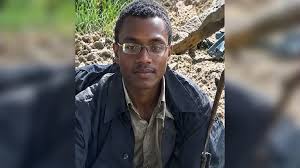
Al-Minuki was a product of the insurgency itself. Born in 1982 in Mainok, along the Benisheikh axis of Borno State, he took his pseudonym from his hometown.
Those who knew him in his early years, during the rise of the late founder of Boko Haram, Mohammed Yusuf, told HumAngle that he was a young man who ran a small barbing salon in Mainok village, about 58 kilometres west of Maiduguri, the state capital.
Long before his name became associated with violence and insurgency, he was known simply as a village barber.
Before pledging allegiance to the Islamic State in 2015, he was a senior Boko Haram commander with a documented antagonism toward its then leader, the late Abubakar Shekau.
His split with Shekau was a result of competing visions of insurgency, as Shekau operated through spectacle, brutality and deliberate isolation from the Islamic State central command.
The faction that became ISWAP sought structure, territorial governance and integration with the IS international hierarchy.
When IS reportedly requested fighters for Libya during the height of the Syrian conflict, Shekau refused, but Al-Minuki, then commanding ISWAP’s Lake Chad division, complied, a major reason he rose within IS’s provincial bureaucracy, while Shekau remained suspect in its eyes.
After Shekau declined ISIS’s request to send fighters to Libya, Al-Minuki, who was ISWAP’s Lake Chad area commander at the time, sent some fighters himself, an action that reportedly angered Shekau and pointed to a growing rift between the then Boko Haram commander and those who wanted a closer working relationship with ISIS.
Around mid-2016, ISWAP split in two, with internal opposition to Shekau’s leadership finally coming to a head.
Al-Minuki had long occupied a powerful position within the ranks of ISWAP, but his influence deepened after the deaths of Abu Musab al-Barnawi, and that of Abu Rumaisa or Abba, later, both sons of Yusuf in 2023.
Their deaths created a vacuum at the centre of the ISWAP leadership structure and how it interacted with the Islamic State global networks, thrusting Al-Minuki into a more strategic role in coordinating operations of the terror group across the Lake Chad region.
Al-Minuki was the man most responsible for keeping ISWAP wired into the Islamic State’s international infrastructure.
Despite benefiting from ISIS’s largesse, Shekau bristled at the caliph’s assertions of authority over him. When ISIS requested 1,000 ISWAP fighters to help defend the city of Sirte in Libya, Shekau declined, saying he could not spare the men.
Shekau was to have often been irritated at the constant prying of Abu Obeidah and his team, whom he believed posed a threat to his command.
Obeidah was reportedly an experienced Libyan jihadist who arrived in the Sambisa Forest to coordinate training.
In 2018, Mamman Nur, ISWAP leader, was executed by members of the terrorist group. In the weeks leading up to his death, there was said to be internal dissent about how the Dapchi incident was handled.
Recall that on February 19, 2018, ISWAP fighters abducted 110 girls from the Government Girls’ Technical School, Dapchi, in the Bursari Local Council of Yobe state.
About 107 hostages were later released. Both the government and ISWAP denied that ISWAP had received a ransom, with the terrorist group claiming that it was making a goodwill gesture.
After Nur’s death, Al-Minuki, who was a rival, emerged as a leading figure in the organisation, alongside Mustapha Kirmima, another ISWAP commander. He was reportedly among the hardliners dissatisfied with Nur’s leadership.
In 2020, Al-Minuki was identified as the second deputy emir of ISWAP in a letter that sought to address the institutional leadership crisis.
It is uncertain when the commander became the senior leader of ISIS’s al-Furqan office, one of ISIS’s most vigorous and best-established regional networks.
The al-Furqan office covers Nigeria and its neighbours, as well as the Islamic State in the Greater Sahara (ISGS) affiliate in the western Sahel and provides ISIS affiliates with operational guidance and international funding.
Published:

Related articles

Recent articles
