
*Vote-Buying, Inducement: Police To Work With EFCC, ICPC, Says IGP
*Pending Court Cases Over Party Primaries Won’t Stop 2027 Elections
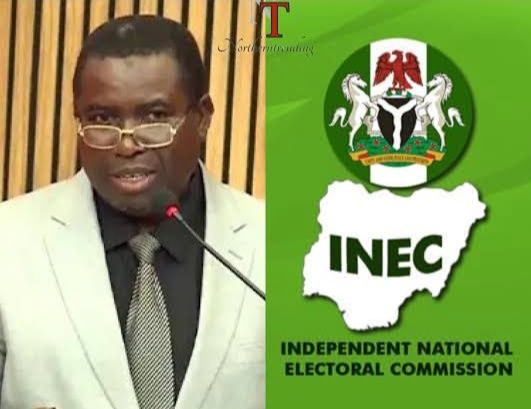
CHAIRMAN of the Independent National Electoral Commission (INEC), Joash Amupitan, has assured Nigerians that results of next year’s general elections will not be decided in advance, saying the Commission was committed to organising transparent, free and credible elections, while working with security agencies to prevent violence before, during and after the elections.
Amupitan, in a statement on Wednesday, September 23, by his Chief Press Secretary and Media Adviser, Adedayo Oketola, identified insecurity in some parts of the country as one of the major challenges ahead of the 2027 elections, while speaking at the 6th Conference and Retreat for Senior Police Officers in Owerri, Imo State, with focused on developing a roadmap for managing security during elections.
He stated: “There are still some states in Nigeria that you have a lot of insecurities around, and it’s a major source of concern for us, because that can be a source of disenfranchisement of Nigerians, and we don’t want any Nigerian to be disenfranchised.”
Amupitan said INEC was working with the Nigeria Police Force (NPF), which is the lead agency responsible for election security, to develop measures that would allow elections to take place safely in areas affected by insecurity.
The INEC boss also raised concerns about the growing focus on personalities, rather than policies during political campaigns, urging political parties and candidates to campaign on issues and avoid personal attacks.
He disclosed that INEC was collaborating with law enforcement agencies to ensure that anyone who violates the Electoral Act is arrested, investigated and prosecuted.
Amupitan said disputes arising from parties’ primaries would be handled by the courts and would not prevent the elections from going ahead, explaining that the Electoral Act provides a legal process for resolving primary-related disputes, including appeals up to the highest court.
He explained that elections are contested by political parties, rather than individual candidates, meaning that pending cases would not stop a party from taking part in the polls, noting: “Whichever decision that comes out with at the end of the day, INEC will abide by it.”
Amupitan said INEC was also improving its intelligence-gathering efforts to tackle vote-buying, particularly as much of the practice takes place away from polling stations, adding: “These things are done and planned before the election.
“Most of the issues of vote-buying now, you don’t even see them at the polling units; they are done outside of the polling units. So, we need to activate intelligence.”
He said INEC was considering the creation of a joint task force involving the Federal Ministry of Justice, office of the Attorney General of the Federation and security agencies, as it does not have the powers to arrest or investigate suspects.
Amupitan assured that INEC would continue to improve its logistics and management of election results by addressing weaknesses identified during previous elections, adding that recommendations from the retreat would be taken to the Inter-Agency Consultative Committee on Election Security (ICCES), which includes the Inspector General of Police, INEC chairman and other security and relevant government agencies, including the Office of the National Security Adviser (NSA).
On INEC’s preparations, Amupitan said recent off-cycle elections had helped the Commission to identify areas that needed improvement ahead of 2027, recalling that none of the five off-cycle elections conducted so far had been declared inconclusive.
He said INEC had applied lessons from each election to improve the conduct of subsequent polls, and would continue working to restore and strengthen public confidence in the electoral process.
On his part, the IGP, Tunji Disu, said the Police will work with the Economic and Financial Crimes Commission (EFCC) and the Independent Corrupt Practices and other related offences Commission (ICPC) to investigate vote-buying and voter inducement during the general elections.
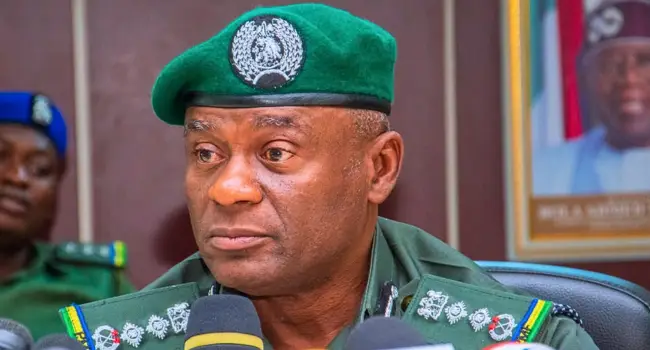
Disu vowed that the Police would go beyond arresting suspects involved in electoral offences by ensuring that investigations are conducted and cases prosecuted, saying: “Arrest is not enough. We will work with INEC, the EFCC and the ICPC to investigate vote-buying and inducement, and with prosecutors so that those arrested face trial, not just headlines.
“Impunity is the greatest encouragement to electoral crime.”
“No agency secures an election alone, so we will hold joint exercises with INEC and sister agencies and set clear lines of command and communication before an incident, not after.
“Our intelligence and early warning systems must be fully activated, with flashpoints and criminal networks mapped now.
“Commissioners must know their communities, and credible intelligence must reach command in time to act.”
He identified election-related disinformation as another potential source of unrest. Assuring that the Police would monitor false information capable of triggering violence, the IGP added: “Falsehood now travels faster than any patrol. Fake results, forged police statements and inflammatory videos can spark violence before we arrive.
“We will monitor and counter election disinformation quickly, correct it with facts, and pursue those who deliberately incite violence online.”
Disu warned politicians and their supporters against electoral offences, including vote-buying and inducement, saying: “Do not hire mobs, buy votes, move arms or threaten voters and electoral officials.
“The Police will act against anyone who does, whatever their status.
“We protect citizens and enforce the law. We do not decide political outcomes. We will be firm against violence, but always within the law.”
The IGP directed every commissioner of Police to publish an official contact number through which the public could reach them.


