
THE United States (US) and Britain has carried out strikes from the air and sea against Houthi military targets in Yemen in response to the movement’s attacks on ships in the Red Sea, a regional widening of the Israeli-Hamas war in Gaza.
Witnesses in Yemen confirmed explosions throughout the country, saying raids targeted a military base adjacent to Sanaa Airport, a military site near Taiz Airport, a Houthi naval base in Hodeidah and military sites in Hajjah governorate.
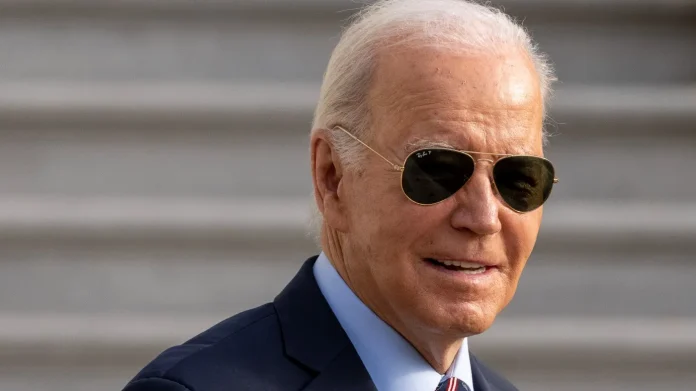
“These targeted strikes are a clear message that the US and our partners will not tolerate attacks on our personnel or allow hostile actors to imperil freedom of navigation,” US President Joe Biden said in a statement.
Britain’s Defence ministry said in a statement that “early indications are that the Houthis’ ability to threaten merchant shipping has taken a blow.”
James Heappey, a junior Defence Minister, said the strikes were in self-defence and no further action was planned for now.
A Houthi military spokesperson said 73 strikes had killed five of the group’s fighters and wounded six others, vowing the attacks would not go without “punishment or retaliation” and the group would continue to target ships headed for Israel.
The Houthis, an armed movement that took control of most of Yemen over the past decade, have been attacking shipping at the mouth of the Red Sea, one of the world’s busiest trade lanes, since October last year, in support of Hamas.
The US and its allies have deployed a naval task force to the area to protect ships, and US and British warships shot down 21 drones and missiles on Tuesday, January 9 to repel the biggest Houthi attack so far.
Iran, which supports armed groups around the Middle East, including both the Houthis and Hamas, condemned the US and British attacks, which a Houthi spokesperson said there was no justification for.
U.S. Defense Secretary, Lloyd Austin, who is in hospital due to surgery complications, said in a statement that the strikes targeted Houthi drones, ballistic and cruise missiles, coastal radar and air surveillance.
A Houthi official confirmed “raids” in the capital, Sanaa, along with the cities of Saada and Dhamar, as well as in Hodeidah governorate, calling them “American-Zionist-British aggression.”
In reaction, Russia has requested an urgent meeting of the United Nations (UN) Security Council.
The Houthi attacks have disrupted international commerce, forcing some ships to take the long route around Southern Africa, an increase in delivery costs and time that stoked fears of a new bout of global inflation.
The price of oil rose sharply on concern that supplies could be disrupted, with Brent crude rising by two dollars.
The US said Australia, Bahrain, Canada and the Netherlands supported the operation, which it added was part of an international effort to restore the free flow of trade.
The route, which links Europe, Asia and Africa via the Suez Canal, accounts for about 15 per cent of the world’s shipping traffic.
The strikes, the first by the US on Yemeni territory since 2016, were clear demonstration of Washington’s struggle to contain the fallout of the Israeli-Hamas war since it broke out in October last year.
“The concern is that this could escalate,” said Andreas Krieg at King’s College in London, even as Saudi Arabia has called for restraint and “avoiding escalation.”
The Saudis have backed the opposing side in a war against the Houthis for nearly a decade, which has been in a delicate state of peace negotiations.
The US also accused Iran of being involved operationally in the Houthi attacks by providing the military capabilities and intelligence to carry them out.
“We believe that they have been certainly involved in every phase of this,” a senior US official told reporters.
Israel has mounted a military assault that has killed over 23,000 Palestinians in Gaza after Hamas fighters attacked Israel on October 7, last year, killing 1,200 people and seizing 240 hostages.
There have also been escalation of violence in Lebanon and the Israeli-occupied West Bank since then, as well as in Syria and Iraq, both flashpoints where armed groups backed by Iran operate and the US has troops on the ground.
The strikes on Yemen were carried out by aircraft, ships and submarines, with a US official saying over a dozen locations were targeted and the strikes were intended to weaken the Houthis’ military capabilities, as opposed to being just symbolic, adding: “We were going after very specific capability in very specific locations with precision munitions.”
The Houthis have defied a call by the UN to halt their missile and drone attacks on Red Sea shipping routes, with the US warning of consequences if they failed to do so.
Hours before the US and British strikes in Yemen, the US military said the Houthis had fired an anti-ship ballistic missile into international shipping lanes in the Gulf of Aden.
On January 9, US and British naval forces shot down 21 Houthi drones and missiles, which Biden said had directly targeted American ships. But the Houthis said it was in part retaliation for a New Year’s Eve incident when US helicopters sank three Houthi boats, killing fighters who were attempting to board a commercial vessel.
Meanwhile, the US has called on Iran to immediately release an oil tanker seized by its navy in the Gulf of Oman on the order of the judiciary.
Deputy US State Department spokesperson, Vedant Patel, said in Washington on Thursday: “The Iranian government must immediately release the ship and its crew.
“This unlawful seizure of a commercial vessel is just the latest behaviour by Iran or enabled by Iran aimed at disrupting international commerce.
“Iran and Iran-abled provocative actions like this are a menace to the global economy and it must cease.
“We in the US will continue to work to deter and confront the full range of Iran’s concerning and destabilising behaviours.”
Iran’s navy on Thursday seized a tanker in the Gulf of Oman on the order of the judiciary, accusing the ship of stealing Iranian oil and forcing it to change course to an Iranian port.
The St Nikolas tanker was at the centre of a dispute between Tehran and the US last year. It was previously registered under the name Suez Rajan and seized by the US last April.


