
*Terrorism Always A’No’
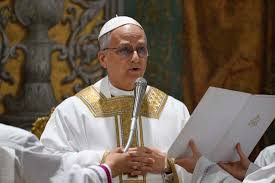
THE Apostolic Nuncio and Permanent Observer of the Holy See to the United Nations (UN), Archbishop Gabriele Caccia, has argued during a three-day conference, where UN member states debatde how to establish peace between Israel and Palestine, that lasting peace can be found only in the two-state solution.
According to the Vatican News, the high-level international conference, held between July 28 and 30, at the UN headquarters in New York, United States (US), dabated the issue on the Peaceful Settlement of the Question of Palestine and the Implementation of the Two-State Solution.
Caccia explained that “in the light of the profound anguish and terrible human suffering that has befallen the region,” the Holy See “unequivocally” condemns the terrorist attack of October7, 2023, by Hamas, adding that “terrorism can never be justified,”
He, however, emphasised that self defense must be contained within the “traditional limits of necessity and proportionality,” voicing Holy See’s concern about the deteriorating humanitarian crisis taking place in the Gaza Strip.
He highlighted the atrocities that continue to “wound an already distressed community,” with scores of children killed and homes, hospitals, places of worship destroyed, a situation he said was “deeply concerning, given that Christians in the region have long played a vital role as a moderating and stabilising presence, promoting dialogue and peace.”
In light of the widespread displacement of families, collapse of critical services, increasing hunger and hardship, the Holy See urgently called for “an immediate ceasefire, release of all Israeli hostages, restitution of the bodies of the deceased, protection of all Palestinian civilians in accordance with international humanitarian law and unhindered access to humanitarian assistance.”
Caccia expressed the Holy See’s firm belief that the two-state solution, “based on secure and internationally recognised borders, is the only viable and equitable path toward a just and lasting peace.”
Realising that that will take more than simple words, but concrete steps, the Holy See had recognised the State of Israel with the 1993 Fundamental Agreement, and the State of Palestine through the 2015 Comprehensive Agreement, and remains committed to the inalienable rights of the Palestinian people and continues to back their “legitimate aspirations to live in freedom, security and dignity within an independent and sovereign state.”
He stated that Jerusalem, being a city sacred to Christianity, Islam and Judaism, it needs a status that rises above political divisions and preserves this unique identity.
To achieve this, the Holy See reaffirmed its longstanding call for a special status recognised internationally, which protects the rights and dignity of all residents and believers of the three religions, “the equality before the law of their institutions and communities, safeguarding the City’s sacred character and exceptional religious and cultural heritage.”
Moreover, this status must offer protection for the holy places, allow unrestricted access to them and offer the ability to worship there.
The archbishop reiteraed the need for the “status quo” to be preserved, when applicable, and that no one should be harassed in the city, recalling Pope Leo’s call for peace and the preservation of human dignity, “an immediate end to the barbarity of war and for a peaceful resolution to the conflict,” as well as “appeal to the international community to uphold humanitarian law, ensure the protection of civilians, and respect the prohibitions against collective punishment, indiscriminate use of force and forced displacement of populations” during his Angelus on July 20.


