
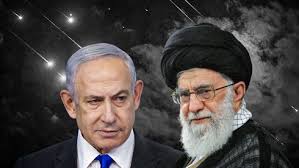
*Iran Launches Over 100 Drones In Retaliation, Vows More Actions
*Tension Mount In Middle East
ISRAEL has launched strikes on Iran, with the authorities confirming the deaths of several Iranian military officers and nuclear scientists.
Israel said Iran has, in retaliation, launched 100 drones at Israel, vowing further responses.
Israel said it targeted Iran’s nuclear programme in the strikes on Thursday morning, June 13, with Iran vowing “severe punishment” following the strikes.
As a result of the escalation of hostilities, Iran, Israel and Iraq have closed their airspace.
United States (US) Secretary of State, Marco Rubio, said Washington was not involved in the Israeli strikes on Iran.
The Commander of Iran’s Revolutionary Guards (IRG) has been killed, according to media reports in Iran
German Foreign Minister, Johann Wadephul, spoke about the recent situation in the Middle East as he started a visit to Egypt, saying: “These developments are more than worrying.”
He stated that his visit is also about “ensuring Iran does not further develop nuclear capabilities,” calling Iran’s nuclear programme “a threat to the whole region, and especially for Israel,” even as he appealed to all sides against “taking escalatory measures.”
Lebanon, Jordan and Israel are also scheduled stops on the trip, with the escalation between Israel and Iran likely affecting the plan.
“I will consider this further this afternoon and will then be able to comment on it,” said Wadephul of his itinerary.
As tension rose over the strikes, Israel lifted air raid shelter warning, saying ‘many’ of the Iranian rones were shot down.
The authorities lifted a requirement for citizens to remain close to air raid shelters amid retaliatory Iranian drone strikes.
“End of the need to stay near protected space,” the military’s Home Front Command announced.
Earlier, the Israeli military said it had begun intercepting the first of around 100 Iranian drones launched toward Israel in response to the large-scale Israeli attacks on Iran overnight.
According to an Israel Defense Forces (IDF) statement, cited by the left-leaning Israeli newspaper, Haaretz, the requirement was lifted “against the backdrop of an IDF assessment that we are temporarily in control of the drones.”
Other Israeli outlets, including ynet and N12 have reported that “all” Iranian drones had been shot down, which the IDF has not explicitly confirmed, with a military official only confirmed that “many” had been intercepted.
Middle East expert said Israel is seeking political opportunity at moment of Iranian military weakness to attacks the “heart” of Iran’s nuclear programme.
The strikes killed Hossein Salami, chief of Iran’s Islamic Revolutionary Guards, a powerful branch of the country’s armed forces, as well as other senior military figures and nuclear scientists, Iranian state media reported.
Civilians, including children, were also reported to be among those killed, according to state media, but this could noe be independently verified at press time.
The IDF said the chief of staff of the Iranian Armed Forces, Commander of the Iran’s Islamic Revolution Guard Corps (IRGC) and the Commander of Iran’s Emergency Command “were all eliminated in the Israeli strikes across Iran,” which is noted attack focused on “over 100 targets, including senior figures of the Iranian General Staff and leaders of the nuclear programme.”
Iranian state media reported that those killed included Hossein Salami, the commander-in-chief of the IRGC; Gholamali Rashid, the commander of Khatam-al Anbiya Central Headquarters, and the chief of staff of Iran’s armed forces, Mohammad Bagheri.
IRGC-affiliated news agency, Tasnim, reported that six nuclear scientists were also killed in the strikes, of whom five have been named as Fereydoon Abbasi, former head Iran’s Atomic Energy Organisation; Mohammad Mahdi Tehranchi, who was involved in Iran’s nuclear weapons programme; Abdulhamid Minouchehr, head of nuclear engineering at Iran’s Shahid Beheshti University; Ahmad Reza Zolfaghari, a nuclear engineering professor at Shahid Beheshti University; and Amirhossein Feqhi, another nuclear professor at Shahid Beheshti University.
Ali Shamkhani, senior adviser to Iranian Supreme Leader, Ayatollah Ali Khamenei, was also reported to have been seriously injured, according to Iranian reports.
Khamenei warned Israel it faced a “bitter and painful” fate over the attacks, while the Iranian military said there were “no limits” to its response.
Salami, 65, was known for taking a hardline stance against Iran’s rivals, including Israel and the US. Just last month, he had warned that Tehran would “open the gates of hell” if attacked by either country.
Just a day before the strikes, he had said that Iran was “fully ready for any scenarios, situations and circumstances,” adding: “The enemy thinks it can fight Iran the same way it fights defenceless Palestinians who are under an Israeli siege.
“We are war-tested and experienced.”
Multiple strikes were reported, including on Iran’s main nuclear enrichment facility, as explosions were reported in Iran’s capital, Tehran, around 03:30 local time (01:00 BST).
Iranian state television said residential areas in Tehran were hit, with blasts also heard north-east of the capital.
However, In Israel, residents were woken by air raid sirens around the same time and received emergency phone alerts.
Israel’s military said it had struck “dozens of military targets, including nuclear targets in different areas of Iran”.
Hours after the initial strikes, an explosion was reported at the Natanz nuclear facility, which is located about 225 kilometres (140 miles) south of the capital, according to Iranian state media.
The global nuclear watchdog, the International Atomic Energy Agency (IAEA), later confirmed the Natanz facility had been hit, saying it was informed by Iranian authorities that there had been no increase in radiation levels at the Natanz site.
IAEA head, Rafael Grossi, said nuclear facilities “must never be attacked” and such strikes have “serious implications for nuclear safety, security and safeguards, as well as regional and international peace and security.”
In a statement to Board members, Grossi called “on all parties to exercise maximum restraint to avoid further escalation,” saying “any military action that jeopardises the safety and security of nuclear facilities risks grave consequences for the people of Iran, the region and beyond.”
Israeli Prime Minister, Benjamin Netanyahu, said the strikes, called Operation Rising Lion, were “a targeted military operation to roll back the Iranian threat to Israel’s very survival.”
He said the operation would “continue for as many days as it takes to remove the spread,” adding: “In recent months, Iran has taken steps that it has never taken before, steps to weaponise this enriched uranium.
“If not stopped, Iran could produce a nuclear weapon in a very short time. It could be a year. It could be within a few months, less than a year. This is a clear and present danger to Israel’s very survival.”
In his address, Netanyahu also thanked US President, Donald Trump, for “confronting Iran’s nuclear weapons programme.”
An Israeli military official told the BBC that Iran had enough nuclear material to create nuclear bombs “within days.”
Meanwhile, Iran has vowed to defend its sovereignty, with the Foreign ministry saying its armed forces would not “hesitate to defend Iran’s sovereignty with full strength and in the manner they deem appropriate.”
In a statement, the ministry called Israel’s operation “acts of aggression,” warnig that “the US Government, as the primary patron of this regime, will also bear responsibility,” despite Rubio distancing and saying it was not involved with the strikes and did not provide any assistance, as the top priority for the US was to protect American forces in the region.
There has been growing tension between Netanyahu and Trump over the possibility that Israel would launch an attack on Iran. Trump has been telling the Israeli leader that he doesn’t want him to do this now and to wait, while the US administration continues nuclear negotiations with the Iranians.
But the Israelis clearly thought that they had their opportunity to act, believing that the Iranians are as debilitated as they are going to be in the region after last year’s degradation of Hezbollah in Lebanon, which took away a huge deterrent factor from Israel.
Netanyahu felt that now was the time, even if the Americans don’t like it, Israel having advised the US that it believed the attack on Iran was “necessary for its self-defence,” and Rubio has issued a warning to the regime in Iran: “Let me be clear: Iran should not target U.S. interests or personnel.”
Tehran insisted Israel’s operation “cannot have been carried out without the coordination and permission of the United States.”
Trump has yet to comment on the strikes.
Oman, which has been mediating US-Iran nuclear talks, said it held Israel responsible for “this escalation and its consequences,” while United Kingdom (UK) Prime Minister, Keir Starmer, said reports of the strikes are “concerning,” urging de-escalation, as did France.
Australia’s Foreign Minister, Penny Wong, said the strikes risked “further destabilising a region that is already volatile,” an action also condemned by Japan, Turkey, Indonesia and Saudi Arabia.
China said it was “deeply worried about the severe consequences” that the strikes may bring, and the United Nations (UN) Secretary General, António Guterres, asked both sides for “maximum restraint” to avoid “at all costs a descent into deeper conflict,” according to his spokesperson.
Iran has long maintained that its nuclear programme is for civilian purposes only. It has several facilities around Iran, at least some of which have been targeted in the Israeli strikes.
But many countries, as well as the global nuclear watchdog, IAEA, are not convinced Iran’s programme is for civilian purposes alone.
Only on Thursday, June 12, the watchdog’s Board of Governors formally declared Iran in breach of its non-proliferation obligations for the first time in 20 years.
It cited Iran’s “many failures” to provide full answers about undeclared nuclear material and Iran’s stockpile of enriched uranium.
An earlier IAEA report said Iran had enriched uranium to 60 per cent purity, enough near weapons grade uranium to make nine nuclear bombs.
A Middle East expert said Israel’s escalation may be an attempt to realign Western support regarding Iran’s nuclear programme.
A screengrab from FlightRadar24 taken shortly before the strikes showed commercial jets avoiding a large part of the region, with no commercial flights over Iran, Israel, Iraq, Syria and Jordan.
Instead, a series of Notams, advisory and warning notices sent to flight crews by air traffic control providers, were issued, closing the routes used by airlines over these countries due to “operational reasons.”
Iran’s airspace was initially said to be closed until 10:00 GMT (11:00 BST), however, following the Israeli strikes, a new advisory was issued saying Iran’s airspace was closed indefinitely.
Shutting down Iran’s airspace will mean flights between South and South-East Asia, the Middle East and Europe will have to take less direct routes, making flights longer.
Israel has also closed its main international airport, Ben Gurion in Tel Aviv, and its biggest airline, El Al, has suspended services.
The coming hours and days are absolutely critical. (Sources: BBC, DW, Reuters, AP, dpa, AFP)


