
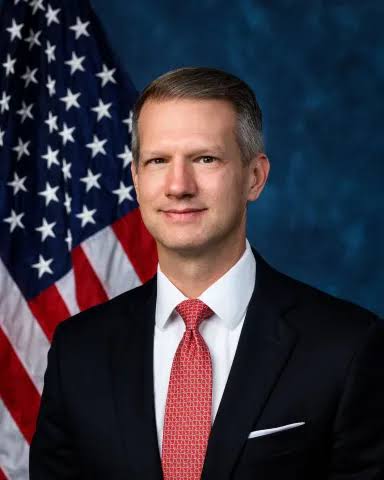
A MEMBER of United States (US) House of Representatives, Riley Moore, has lamented that Christians in Nigeria have continue to face unspeakable violence, one year after Nigeria was designated Country of Particular Concern (CPC).
Moore, who stated this in a post on his X handle to mark the anniversary of Nigeria’s designation as CPC by President Donald Trump, said: “Christians in Nigeria, and around the world, continue to face unspeakable violence.
“On this anniversary, we must rededicate our efforts to defend Christians in Nigeria and anywhere they face persecution.”
Moore’s statement followed his review of the impact of CPC designation, which he said was a right decision by Trump, alongside efforts by House Appropriations Republicans to condition aid to Nigeria and impose requirements to defend Christians, and advocacy by faith-based organisations.
Moore stated: “The President’s steadfast and decisive leadership, @houseappropsgop’s work to condition aid to Nigeria and impose requirements to defend Christians, and the tireless work of advocacy and faith based organisations has started to make a difference.
“We saw the first Christmas without a massacre of Christians in recent memory.
“There is much more work to be done, but the government of Nigeria has shown signs of a willingness to address the violence against our brothers and sisters in Christ.”
Nigeria was first designated as a CPC by the Trump administration in 2020 over alleged violations of religious freedom.
The designation was delisted in 2021 by the Joe Biden administration, but the decision was criticised at the time by some US lawmakers and faith-based groups.
Trump reimposed the measure in November last year upon return to the White House, citing continued attacks on Christian communities in the Middle Belt and Northeast.
Under US International Religious Freedom Act, the designation allows Washington to impose policy options, including sanctions, aid restrictions and diplomatic pressure on countries adjudged to have engaged in or tolerated systematic violations of religious freedom.
Following the redesignation, House Appropriations Republicans moved to condition US assistance to Nigeria on demonstrable steps to protect Christians and prosecute perpetrators of religious-based violence.
The Federal Government has consistently rejected characterisation of insecurity as religious persecution, arguing that terrorism by Boko Haram, ISWAP, banditry and farmer-herder clashes affect both Christians and Muslims.
It has stated that it was implementing security reforms, engaging with the US on fact-finding and strengthening protection of vulnerable communities across Benue, Plateau, Southern Kaduna and other hotspots.


