
BY PROFESSOR STEVE AZAIKI
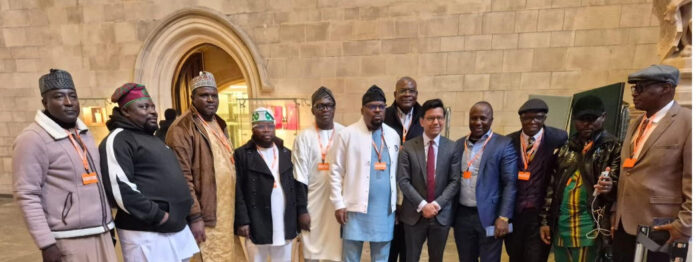
IN the historic and politically rich city of London, I had the privilege of participating in a high-level legislative and leadership workshop organised by Cater & Merger Consult, in collaboration with the C&M Centre for Leadership & Good Governance.
The programme brought together members of the Plateau State House of Assembly, ably led by the Speaker, Gabriel Dewan, for an immersive exposure to legislative best practices in the United Kingdom (UK).
This workshop provided a rare and invaluable opportunity for Nigerian legislators to engage directly with leading academics and practitioners from some of the world’s most prestigious institutions, including University of Cambridge and University of Oxford, as well as experienced parliamentarians from the UK Parliament.
The Historical Foundations Of The UK Parliament
THE UK Parliament is widely regarded as the cradle of modern democracy. Its origins date back to the 13th Century, evolving from the early Councils of Nobles into a bicameral legislature, comprising the House of Commons and the House of Lords.
The principles of accountability, representation and the rule of law, hallmarks of parliamentary democracy, have been refined here over centuries and exported across the Commonwealth, including Nigeria.
Observing proceedings firsthand in the House of Commons was both enlightening and inspiring. Having previously served in Nigeria’s House of Representatives, I was particularly struck by the depth, structure and discipline of debate. Contributions were precise, evidence-based and sharply focused on policy outcomes.
During one such sitting, presided over by the Deputy Speaker, Nusrat Ghani, Pembers of Parliament (MPs) rigorously engaged the Home Secretary, Yvette Cooper, on issues relating to Iran and national security. The robustness of legislative scrutiny was evident, as MPs took turns to interrogate policy positions and demand clarity.
Among those who contributed to debates and discussions on security and international affairs were Jim Shannon of the Democratic Unionist Party, Shockat Adam (Independent), Jess Phillips and Darren Jones.
Their interventions reflected a culture of accountability, where ministers are not merely heard, but thoroughly scrutinised.
Particularly compelling was the presentation by the Minister responsible for AI and Digital Policy, Feryal Clark, whose insights into online safety and emerging technologies underscored the forward-looking nature of UK governance.
UK Supreme Court: Guardian Of Rule of Law
OUR visit to UK’s Supreme Court provided a practical understanding of judicial independence and constitutional interpretation. Established in 2009, the court marked a significant reform in the UK’s separation of powers, assuming the highest appellate functions previously exercised by the House of Lords.
Sitting in the courtroom and observing proceedings reinforced the critical role of the judiciary in maintaining checks and balances within a democratic system. The clarity of legal reasoning, the decorum of proceedings and the accessibility of justice were particularly noteworthy.
President Tinubu’s Visit To UK: A Strategic Moment
ONE of the highlights of the visit was the opportunity for private discussions around the significance of the visit of President Bola Ahmed Tinubu to the UK. Such engagements are pivotal in strengthening bilateral relations between Nigeria and the UK, particularly in areas of trade, security cooperation, governance reforms and Diaspora engagement.
At a time when global partnerships are increasingly vital, Tinubu’s visit represents a strategic effort to reposition Nigeria on the global stage, attract investment and deepen institutional collaboration.
Celebrating Excellence: The Imafidon Legacy
IT was a personal delight to meet the renowned Chris Imafidon, whose family has become a symbol of intellectual excellence in the Diaspora. The Imafidon family gained international recognition when his children, often referred to as the “Britain’s Brainiest Family,” achieved extraordinary academic feats at remarkably young ages, including setting records in Mathematics and Sciences.
Their story is not just one of brilliance, but of discipline, mentorship and the transformative power of education- values that resonate deeply with the objectives of leadership development.
Value Of Experiential Legislative Training
THE workshop went far beyond theoretical discussions; it offered practical, real-world exposure, such as observing live parliamentary debates and committee sessions; interacting with MPs and policy experts; understanding legislative drafting, oversight and constituency engagement; and experiencing judicial processes at the highest level.
For the Plateau State legislators, this was an opportunity to benchmark global best practices and reflect on how such standards can be adapted within Nigeria’s unique political and institutional context.
A Call To Action
PROGRAMMES such as this underscore the importance of learning “at the source.” The UK remains one of the most influential models of parliamentary democracy, and institutions like Cater & Merger Consult possess the capacity to design and deliver impactful legislative training.
I strongly encourage state Houses of Assembly across Nigeria to take advantage of such opportunities. Exposure to global best practices is not a luxury; it is a necessity for strengthening governance, deepening democracy and delivering meaningful development to our people.
This experience in London was not just a study tour; it was a reaffirmation that effective leadership and good governance are built on knowledge, discipline and continuous learning.


