

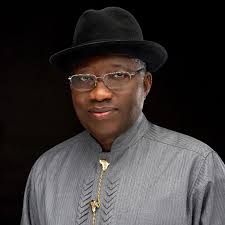
FORMER President, Goodluck Jonathan, has been dragged before the Federal High Court in Abuja, by a lawyer, Johnmary Chukwukasi Jideobi, who is seeking a permanent order barring him from participating in the 2027 presidential election or any future elections over the interpretation of Sections 1(1), (2), (3) and 137(3) of the 1999 Constitution (as amended).
Jideobi, in the suit, marked FHC/ABJ/CS/2102/2025, also pleaded with the court to restrain the Independent National Electoral Commission (INEC) from accepting or publishing Jonathan’s name as a presidential candidate under any political party.
He also prays the court to issue a perpetual injunction stopping Jonathan from presenting himself for nomination under any political platform for the election, as well as an order directing the attorney general of the Federation to ensure compliance with any order the court may issue.
Jideobi wants the court to determine, “Whether, in view of the combined provisions of Sections 1(1), (2), (3), and 137(3) of the 1999 Constitution, the first defendant (Jonathan) is eligible, under any circumstances, to contest for the office of the President of the Federal Republic of Nigeria.”
He is of the belief that a “careful and holistic interpretation” of these sections disqualifies the former President from running again, given that he has already been sworn in twice, and is praying the court to declare that Jonathan is ineligible to stand for or occupy the office of President again, having previously been sworn in and served as President.
INEC equally believes that INEC has no constitutional authority to receive or publish Jonathan’s name as a presidential candidate in any election; that Jonathan should be restrained perpetually from seeking nomination from any political party for presidential elections in 2027 or beyond; and INEC should be barred perpetually from accepting or publishing his name as a candidate.
In an affidavit submitted by Emmanuel Agida, the Plaintiff argued that Jonathan, who was vice president, first assumed the presidency on May 6, 2010, following the death of the late then President, Umaru Musa Yar’Adua, on May 5, 2010.
Agida, who identified himself as an advocate of constitutionalism and the rule of law, stated in court that he felt compelled to take action after seeing reports in national newspapers indicating that Jonathan might contest the presidential election again in 2027, arguing that allowing such an attempt would violate constitutional provisions that limit the number of times a person can hold the office of President.
The affidavit states: “That the Plaintiff believes that the 1st defendant, having completed the unexpired term of late President Yar’Adua, and subsequently served a full term after the 2011 election, has exhausted the constitutional limit of two tenures as President.
“That if the court does not intervene timeously, a political party may present the 1st defendant as its presidential candidate in the 2027 general election, thereby breaching the Constitution,” the suit reads further.
The Plaintiff insisted that part of his duties, as a lawyer, is to forestall a violation of the Constitution and to uphold the rule of law, adding: “There are chances that one of the political parties in Nigeria may favour the 1st defendant to stand as its presidential candidate in the forthcoming 2027 general elections to be conducted and overseen by the 2nd Defendant.
“If unchallenged, the 1st defendant may enter the 2027 presidential race on the platform of one of the political parties in Nigeria and may possibly emerge the winner of the said election.
“In the event the 1st defendant is returned as elected and sworn as the President of the Federal Republic of Nigeria come in 2027, it will mark the 3rd time the 1st defendant will be taking oath of office as the President of the Federal Republic of Nigeria.
“In the event the 1st defendant is returned as elected and sworn as the President of the Federal Republic of Nigeria come in 2027, the plaintiff, as a Nigerian citizen, would become one of the those under the governance control of the 1st defendant (who by virtue of his office would be saddled with the responsibility of executing the laws of the country).
“As a Nigerian lawyer trained in Nigerian constitutional law, the Plaintiff has come across a provision in the Nigerian constitution, stating that a person who was sworn-in as President to complete the term for which another person was elected as President shall not be elected to such office for more than a single term.
“The Plaintiff knows that the 1st defendant was indeed, on the 6th May, 2010, sworn in as President to complete the term for which (former) President Umaru Musa Yar’Adua was elected as President, as a consequence of the demise of the former President on the 5th day of May, 2010.
“The 1st defendant, after being sworn in on 6th May, 2010 to complete the term of late Umaru Musa Yar’Adua, was subsequently elected into the office of the President of the Federal Republic of Nigeria and sworn in on the 27th May, 2011.
“I know that if the 1st defendant eventually wins the forthcoming 2027 general election as President of the Federal Republic of Nigeria (which is for a term of 4 years, spanning 2027 to 2031), he will have exceeded 8 years being the cumulative maximum years a Nigerian President is to stay in office.
“As a Nigerian Lawyer trained in Nigerian constitutional law, the Plaintiff knows of a provision in the Nigerian constitution stating that the Federal Republic of Nigeria shall not be governed, nor shall any persons or group of persons take control of the Government of Nigeria or any part thereof, except in accordance with the provisions of the same Constitution.
“The Plaintiff, being a lawyer committed to the reign of constitutionalism, an unrepentant apostle of the rule of law and a known crusader for democratic governance, especially in Nigeria, does not wish to be governed by any person or group of persons who may have taken control of the Government of Nigeria in a manner not contemplated by the Nigerian constitution.
“The Plaintiff has instituted this suit in the public interest, in the defence of the rule of law and accentuation of the supremacy of the Constitution and to preserve the integrity of the Nigerian Constitutional order.
“It will be in the interest of justice for this Honourable Court to grant the prayers contained on the face of this Originating Summons.”
Jonathan, who has been at the centre of ongoing legal debates regarding his potential bid for re-election, was yet to personally, openly and formally comment on moves to drag him into the race.
Section 137(3) of the 1999 Constitution, which was introduced by the Fourth Alteration Act, bars anyone who has been sworn in as President twice from running for the office again.
Published:

Related articles

Recent articles
