

JIHADISTS of the Islamic State group, on Friday, January 30, claimed responsibility for the attack on the Diori Hamani International Airport overnight, outside Niger’s capital, Niamey, on Wednesday through Thursday.
The group, through its Amaq information service, said it was behind the “co-ordinated surprise attack” targeting “the military base” of the Niger army.
No casualty figures were given, but Amaq said the assault had caused “major damage.”
Eyewitness accounts and videos showed air defence systems apparently engaging unidentified projectiles in the early hours of Thursday, but services at the airport returned to normal during the day.
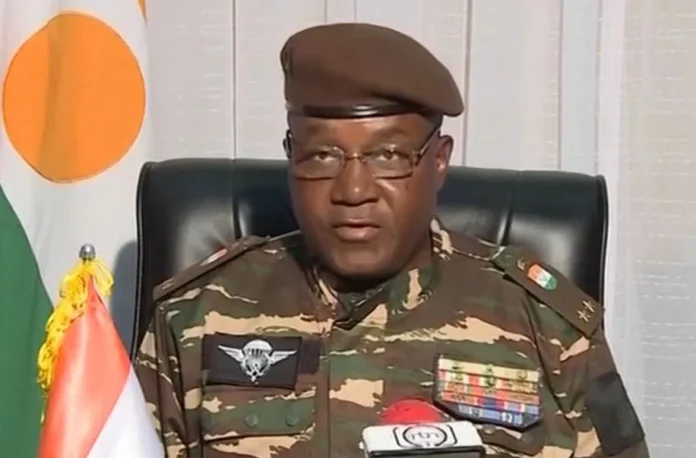
The head of Niger’s junta, Gen. Abdourahamane Tiani, on Thursday thanked Russia for its help in foiling the attack on the airport, accusing the Presidents of France, Benin and Ivory Coast (Emmanuel Macron, Patrice Talon and Alassane Ouattara) of backing those responsible.
He did not give details of what help Russia had provided or provide any evidence to support his accusations against the other countries.
The Defence ministry later said four military personnel were injured and 20 attackers killed, with state television saying a French national was among them.
There were 11 arrests over the attack, in which sustained heavy gunfire and loud explosions were heard nearby.
The military, which seized power in a July 2023 coup, have frosty relations with France and Benin, and regularly accuse them of trying to destabilise Niger, which both countries deny.
Tiani stated: “We commend all the defence and security forces… as well as Russian partners who defended their security sector with professionalism,” Tiani said on state radio.
“We remind the sponsors of these mercenaries, notably Emmanuel Macron, Patrice Talon and Alassane Ouattara: we’ve heard them bark quite enough; now they should get ready to listen to us.”
Since the coup, Niger’s junta has cut military ties with France, the former colonial power, and instead worked with Russia to help tackle the Islamist fighters, who have been fighting in the region for over a decade.
The country’s Defence Minister, Salifou Modi, said in a statement on public television that the mercenaries attacked an air base in the capital for “about 30 minutes” before an “air and ground response.”
The channel broadcast footage of Tiani visiting the military base, showing the bodies of the attackers and said there was “a Frenchman” among them.
The airport houses an air force base, headquarters of a tri-national counterterrorism force involving Niger, Mali and Burkina Faso, and is about 10 kilometres (six miles) from the presidential place.
According to the FlightRadar24 website, several flights bound for Niamey were diverted.
AFP reported heavy security deployment around the airport on Thursday morning.
Niger is a major producer of uranium and a huge uranium shipment destined for export has been stuck at the airport amid unresolved legal and diplomatic complications with France after the military government nationalised the country’s uranium mines.
The shipment was unharmed in the attack, according to sources cited by Reuters.
The assault, which lasted several hours, was carried out by armed assailants mounted on motorcycles, who switched off their headlights to infiltrate the city undetected.
The attackers reportedly targeted military installations co-located with the civilian airport, including drone platforms, air defense systems and commercial aircraft belonging to Air Côte d’Ivoire and ASKY Airlines.
Mortars, drones and small arms were used in the attack, whose execution has drawn comparisons to the September 2024 assault on Modibbo Keita International Airport in Bamako, Mali, where JNIM openly claimed responsibility.
The incident exposes multiple vulnerabilities and mirrors the risk posed by mobile, lightly armed attackers capable of striking highly sensitive sites in urban areas.
It draws attention to the gaps in intelligence sharing and regional cooperation and the potential for political disputes to exacerbate security threats, as well as increase mutual suspicion among countries in the Sahel and West African region, especially since Mali, Niger and Burkina Faso pulled out of the regional bloc, the EconomicCommunity of West African States (ECOWAS) to form a three-nation Sahel bloc.
Published:

Related articles

Recent articles
