
*Netanyahu Denies Report Of Imminent Pause
*Lebanese Minister Calls For International Intervention, Ceasefire
*Hezbollah’s Drone Chief Killed In Israeli Strikes In Lebanon
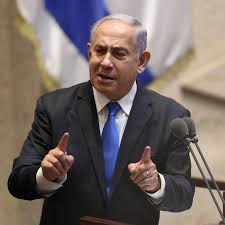
THE Israeli Prime Minister, Benjamin Netanyahu, has rejected a report that he has given the green light for a 21-day ceasefire between Israel and Hezbollah in Lebanon.
“The report about a ceasefire is incorrect. This is an American-French proposal that the prime minister has not even responded to,” a statement from Netanyahu’s office said.
Recall that a group of countries, led by the United States (US) and France is working to secure a deal for the ceasefire.
A report by broadcaster N12 that Netanyahu had instructed the Army to reduce attacks in the northern neighbouring country was also “the opposite of the truth,” his office said, adding: “The prime minister has directed the IDF to continue fighting with full force, according to the plan that was presented to him.”
A joint demand for a ceasefire lasting 21 days was earlier issued by a handful of countries, including the US, Germany, France, Saudi Arabia, the United Arab Emirates (UAE) and Qatar.
The US government said the demand had been coordinated with Israel, with White House spokesman, John Kirby, saying the statement “wasn’t just drawn up in a vacuum.”
It was done after careful consultation, Kirby said, “not only with the countries that signed on to it, but Israel itself.”
The pause is intended to create space for a diplomatic solution to the conflict between Israel and Hezbollah in Lebanon, as well as the nearly year-long Gaza war.
The Israeli military said an airstrike near Beirut killed a senior Hezbollah commander who was responsible for the group’s drone fleet.
The Israel Defense Forces (IDF) said air unit commander, Muhammad Hussain Sarur, was killed in the targeted attack.
Hezbollah confirmed the commander’s death late on Thursday, September 26.
A witness said the third floor of an 11-story building was hit in the Jamous neighbourhood to the south of Beirut, an area considered a Hezbollah stronghold.
Lebanon’s Health Ministry said at least two people were killed and 15 wounded in the bombing.
The strike took place close to where a high-ranking Hezbollah military commander, Ibrahim Akil, was killed last week.
The Israeli Army was also continuing its airstrikes in the south and east of Lebanon, with the military saying the Air Force had hit around 220 Hezbollah militia targets, including weapons depots and rocket launching pads.
Hezbollah, on its part, said it launched 80 rockets at the Israeli city of Safed and another 50 at the town of Ahihud, as well as military sites in northern Israel.
Since Thursday morning, the Israeli Army said some 170 rockets had been launched from Lebanon, with some of the impacts reportedly causing fire outbreaks around Safed.
Israel has also attacked infrastructure used by Hezbollah along the Lebanese-Syrian border, specifically routes used by the group to bring weapons to Lebanon via Syria, according to the Army.
Four border crossings have been hit since Israel intensified its attacks in Lebanon on Monday, September 23, Lebanese security sources said.
The Syrian Observatory for Human Rights, which has been documenting violence in Syria since 2011, said Israeli fighter jets attacked a border crossing in the area around the Syrian town of al-Qusayr, near the border with Lebanon, in which several people were injured.
It is the first Israeli attack on Syrian territory since Monday, the observatory said, adding that Hezbollah tried to use the border crossings to bring more fighters from Yemen and Iraq into the country to support the Shiite militia in the event of a feared ground offensive by the Israeli military.
As a result of the Israeli attacks in Lebanon, around 13,500 people have fled to Syria since Monday, most of them Syrian citizens, according to the Lebanese Interior Ministry, with an estimated 1.5 million Syrian refugees living in Lebanon.
Meanwhile, Lebanese Foreign Minister, Abdallah Bou Habib, on Thursday called for an end to the violence in the Middle East.
In an appeal while addressing the United Nations (UN) General Assembly (UNGA) in New York, Habib said: “This is a situation that requires international intervention on an urgent basis before the situation spirals out of control, with a domino effect, making this crisis impossible to contain.
“The future of our people and our prosperity are imperilled.”
He also called on Israel and the Iran-backed Hezbollah militia to take “all possible measures” to ensure that a ceasefire proposal is accepted.


