
*Thwarts Assassination Plot, Arrests Israeli Businessman
ISRAEL bombed southern Lebanon on Thursday and said it had thwarted an Iran-backed assassination plot, a day after explosions of Hezbollah radios that came on the heels of blasts in booby trapped pagers, setting the foes hurtling towards war.
The sophisticated attacks on communications equipment used by Iran-backed armed group Hezbollah have sown disarray in Lebanon, and are increasingly viewed as heralding a return to all-out war, last fought 18 years ago.
Hand-held radios used by Hezbollah detonated on Wednesday across Lebanon’s south in the country’s deadliest day since cross-border fighting erupted between the militants and Israel in parallel with the Gaza war nearly a year ago.
The previous day, hundreds of pagers- used by Hezbollah to evade mobile phone surveillance – exploded at once, killing 14 people, including two children, and injuring nearly 3,000.
Israel has not commented directly on the attacks, but multiple security sources have said was carried out by its spy agency, Mossad.
Israel says its conflict with Hezbollah, like its war in Gaza against Hamas, is part of a wider regional confrontation with Iran, which sponsors both groups as well as armed movements in Syria, Yemen and Iraq.
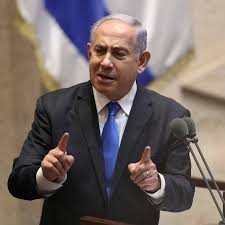
On Thursday, Israeli security forces announced that an Israeli businessman was arrested last month after attending at least two meetings in Iran, where he discussed assassinating Prime Minister Benjamin Netanyahu, the defence minister or the head of the Shin Bet spy agency.
Last week, Shin Bet uncovered what it said was a plot by Hezbollah to assassinate former Defence Minister, Moshe Ya’alon.
Israeli security services said on Thursday they had arrested an Israeli citizen on suspicion of involvement in an Iranian-backed assassination plot targeting prominent people including the prime minister.
A statement said the person was a businessman with connections in Turkey, who had attended at least two meetings in Iran to discuss the possibility of assassinating Prime Minister Benjamin Netanyahu, Defence Minister Yoav Gallant or the head of the Shin Bet domestic intelligence agency.
The arrest took place last month, according to a joint statement by Shin Bet and the Israeli police.
The incident highlights an intelligence war running alongside the escalating conflict on Israel’s border with southern Lebanon.
Shin Bet said the latest arrest showed the efforts Iran was making to recruit Israelis to gather intelligence and carry out terrorist missions in Israel, including by using individuals with criminal backgrounds.
According to the Shin Bet statement, the plot went back to April this year when the Israeli, who has not been identified, agreed to meet a wealthy businessman living in Iran for business purposes.
After being told by representatives that the businessman, identified only as Adi, could not leave Iran, the Israeli man was smuggled into Iran from eastern Turkey, where he met Adi and others, including a man identified as an Iranian security official, the statement said.
The Iranians proposed that he carry out tasks for Iran, including transferring money or a gun, photographing crowded places or threatening other Israeli civilians operating on behalf of Iran, who did not carry out the requested missions.
He returned to Israel, but went back to Iran for a second time in August, smuggled in a truck, the statement said.
On the second visit, it said Iranian officials asked him to carry out terrorist attacks for Iran and made proposals for assassinating Netanyahu or Gallant or Shin Bet chief, Ronen Bar, as well as other operations.
The Israeli man asked for a payment of $1million, but Iranian officials refused the request, saying, however, they would remain in touch and paying him 5,000 euros ($5,570.50) for joining the meetings.
Israel has been accused of assassinations, including blasts in Tehran that killed the leader of Hamas and in a Beirut suburb that killed a senior Hezbollah commander within hours of each other in July.
Despite the events of the past few days, a spokesperson for the UN peacekeeping mission in southern Lebanon said the situation along the frontier had “not changed much, in terms of exchanges of fire between the parties.”
“There was an intensification last week. This week, it is more or less the same. There are still exchanges of fire. It is still worrying, still concerning, and the rhetoric is high,” the spokesperson, Andrea Tenenti, told Reuters.
Israel and Hezbollah have been exchanging fire across the Israeli-Lebanon border in parallel with the war Israel has waged in Gaza against Hamas, the Palestinian militant group whose fighters attacked Israel on October 7.
Tens of thousands of people have had to flee the Israel-Lebanon border area on both sides.
Netanyahu vowed on Wednesday to return the evacuated Israelis “securely to their homes.”
Overnight, Israeli jets and artillery hit multiple targets in southern Lebanon, Israel’s military said, adding that strikes hit Hezbollah targets in Chihine, Tayibe, Blida, Meiss El Jabal, Aitaroun and Kfarkela in southern Lebanon, as well as a Hezbollah weapons storage facility in the area of Khiam.
Israeli media reported that a number of Israeli civilians had been wounded by anti-tank missile fire from Lebanon, but there was no official confirmation.
On Wednesday, Hezbollah fired around 20 projectiles into Israel, most of which were intercepted by air defence systems without causing any injuries, the military said.
Hezbollah launched missile barrages on Israel on the day after the October 7 attack by Hamas and since then, there has been a constant exchange of fire that neither side has allowed to escalate into a full-scale war.


