
*‘Robust Discussions On The Bill, How To Address Concerns Welcome’
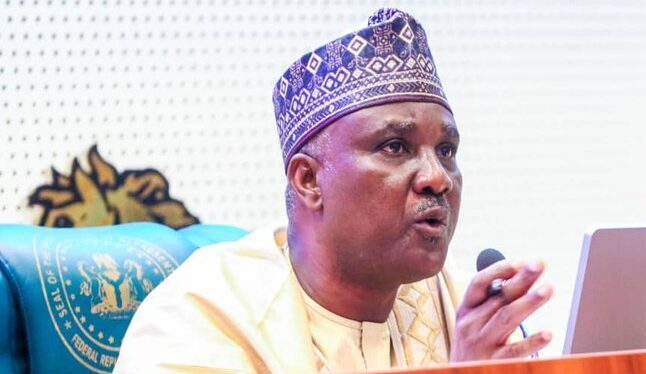
FOLLOWING criticism and condemnation of the Counter -Subversion Bill 2024, sponsored by the Speaker of the House of Representatives, Mr. Tajudeen Abbas, the Speaker, on Wednesday, August 14, clarified that the draft legislation was still at introductory stage and that the House welcomes robust discussions on the Bill and how to address the concerns raised.
A statement signed by his Special Adviser on Media and Publicity, Mr. Musa Abdullahi Krishi, said: “The Speaker appreciates the interest Nigerians have so far shown on the Bill, which pertains to our national security.
“However, it has become necessary to make the following clarifications, considering the tilted reports and misconceptions about the Bill.
“The Counter-Subversion Bill, 2024 (HB. 1652) was introduced on the floor of the House of Representatives on Tuesday, July 23, 2024, with the Speaker as the sponsor. Thus, the Bill is still at the introductory stage.
“The Bill falls within the realm of Nigeria’s anti-terrorism framework,and it seeks to address subversive activities by associations, organisations, militias, cults, bandits and other proscribed groups in Nigeria.
“Similar legislation obtains in other climes with varied appellations. Such countries include the United Kingdom, Spain, India, Turkey, Canada, Australia, among others.
“The Speaker, and by extension the House of Representatives, which is the People’s House, welcome robust engagements and discussions from Nigerians on the contents of the Bill and how best to address the concerns raised.
“By parliamentary processes and procedures, the Bill would have to be listed for Second Reading, where members will thoroughly scrutinise its merits and demerits during debate.
“At this stage, members can decide to ‘kill’ or allow the Bill to pass. But if it scales Second Reading, it would be referred to the relevant Committee of the House for further legislative action.
“The Committee must as a matter of responsibility invite the Nigerian public, particularly relevant stakeholders, to a public hearing on the Bill.”
He added: “It is expected that citizens would bare their minds, either physically or via memoranda on the Bill. Their inputs would form the basis for the committee’s report to be laid on the floor of the House.
“After the consideration of the report, the Bill will be passed for the Third Reading and forwarded to the Senate for concurrence.
“If the Senate deems it fit and concurs with the Bill, a clean copy would be transmitted to the President for assent. Mr. President reserves the right to withhold assent to the Bill.
“The Speaker assures Nigerians that the Bill is all-encompassing, as it relates to Nigeria’s national security and does not target any group or section of the country.
“The Speaker further promises that the Bill and indeed any other draft legislation before the House will pass through all the legislative processes and Nigerians would have ample opportunity to make their inputs, which will constitute the final consideration (or otherwise) of the Bill.”
Many see the Bill as a threat to Nigerians’ fundamental rights and contradicts the core principles of freedom of speech, movement and assembly, which are the pillars of democracy.
The Bill, which is awaiting Second Reading, prescribes, among others, that “anyone found guilty of destroying national symbols, refusing to recite the national anthem and pledge, defacing a place of worship with intent to incite violence or undermining the Federal Government shall face a fine of N5million, a 10-year prison sentence or both.”
Quite a number of Nigerians believe the Bill should be discarded or at least stepped down, especially coming at a time there are more critical challenges, such as hunger, poverty and bad governance, which had led to the recent nationwide protest.


