
THE African Bar Association (ABA) has written the House of Representatives, highlighting purportedly deceptive LGBT provisions in the recently signed Samoa Agreement.
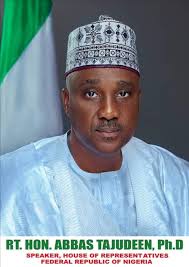
In the letter to House Speaker of the House, Tajudeen Abbas, dated September 12, and titled, ‘Re: Identification, Analysis And Implication of Deceptively Drafted LGBT Provision In the Samoa Agreement,’ the association identified 12 specific provisions within the Agreement that “contain embedded references to sexual orientation and gender identity promoting LGBT agenda.”
The Agreement, which Nigeria signed on June 28, this year, sparked public outrage over its implications on Nigeria’s stance regarding LGBT rights, especially since the country previously delayed its endorsement.
But the Federal Government denied such provisions, with
the Minister of Budget and Economic Planning, Abubakar Bagudu, who signed on behalf of the country, saying insisting there was no LGBT references in the Agreement.
He stressed: “Nowhere in the documents were LGBT or same-sex marriage mentioned even remotely, and emphatically stating that it would be wrong for anyone to imply that Nigeria had accepted those tendencies.”
President of the Nigeria Bar Association (NBA), Yakubu Chonoko Maikyau, lending his voice by saying: “I wish to state that there is no provision in the SAMOA agreement that requires Nigeria to accept or recognise LGBTQ or gay rights, either as a precondition for a loan of $150 billion or at all.”
But critics, including the Catholic Bishops Conference of Nigeria, expressed concerns that the Agreement might inadvertently recognise international LGBT rights, thereby conflicting with Nigeria’s longstanding stance against such ideologies and laws.
In response, the ABA’s Family Law Committee, after analysing and researching the context of the Samoa Agreement indepth, stated: “The Family Law Committee finds that LGBT affirmative language is by content, context and implication deceptively embedded in the provisions, programming and implementation of the SAMOA Agreement.”
These provisions, the committee claimed, include vague language around “sexual orientation” and “gender identity,” which could undermine Nigeria’s laws and cultural values.
Among these are implications regarding non-discrimination clauses and the requirement for comprehensive sexual and reproductive health education, which the association interpreted as supporting LGBT agendas.
It also raised concerns that grant recipients for the treaty’s implementation would include NGOs and agencies that actively support LGBT initiatives, warning that this could lead to a gradual acceptance of these ideologies under the guise of international obligations.
“There is a seriously overlooked problem, one of which ACP countries likely don’t have on their radar at all, and that is the fact that many of the grant recipients for implementing the treaty will be LGBT-supportive NGOs, businesses and UN agencies that are, even now, working to advance the LGBT agenda in Nigeria with EU funds.”
The association stated that its report does not provide an exhaustive list of problematic provisions, as there are too many to address, including the treaty’s assault on the national sovereignty of ACP countries with its supremacy clause, its requirement for ACP countries to hold joint positions and voting in international fora and its mandated stakeholder approach for implementing the treaty, among others.
The ABA, however, added that its report would provide enough material for the House to pronounce itself on whether the Agreement contains LGBT-promoting provisions.


