

THE United States (US) has reiterated a strict stance against corruption in Nigeria, warning that high-profile individuals found to be involved in corrupt practices could be banned from entering the country.
According to the US Mission in Nigeria, in a post, this is part of a broader effort to promote accountability and protect democratic processes in Nigeria.
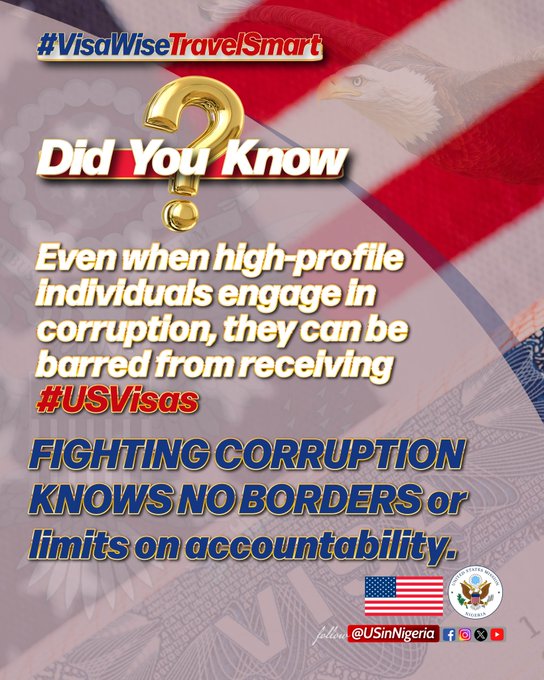
In a message to Nigerians via X, the Mission in said “fighting corruption knows no borders or limits on accountability,” reminding Nigerians that visa restrictions remain a tool available to US authorities for dealing with individuals who undermine the rule of law.
In the post, it said: “Fighting corruption knows no borders or limits on accountability. Even when high-profile individuals engage in corruption, they can be barred from receiving U.S. visas.”
The Mission has concistently stated that visa measures, including lifetime bans in extreme cases, could be applied to those who commit visa fraud or engage in serious corruption.
This came against a backdrop of growing scepticism at home about impunity by public officials.
The Mission disclosed that the country’s use of visa restrictions is not new, saying that since at least 2014, US law and State Department policy have given officials authority to deny entry to foreign government actors involved in “significant corruption” or gross human-rights abuses.
The measure, already codified by Congress, makes it easier to apply when there is “credible information” of wrongdoing.
Rights and anti-corruption groups have consistently highlighted Section 7031(c) of US appropriations law as the statutory basis for such actions.
Recall that after Nigeria’s 2019 general elections, the US publicly warned that those responsible for violence, intimidation or corruption during the polls could face visa consequences.
Some prominent Nigerian politicians, such as former governor of kaduna State, Nasir el-Rufai, have at different times been barred from travel to the US due to corruption allegations or supporting violence during elections.
Published:

Related articles

Recent articles
