
Reports Of US Plan To Reject Dollars Printed Before 2021 Fake
A VIRAL report that the United States (US) has concluded plans to stop the acceptance of dollars printed before 2021 has been discovered to be false.
The report claimed that following the conclusion of an extraordinary meeting held in Washington DC (US) on November 2, 2022, involving the US Federal Reserve; Office of the Comptroller of Currency, International Monetary Fund (IMF); the World Bank and Governors of Africa’s Central Banks, the US Government had set date for restriction for the acceptable legal tender note of US Dollar, which will commence on January 31, next year.
It further claimed that the restriction implies that any US Dollar note below 2021 printed date would no longer be accepted or be a legal tender anywhere in the world.
Promoters of the fake news claimed that this was to curb billions of illegal monies in dollar bills warehoused around Africa emanating from drug related, terrorism, kidnapping and money from corrupt politicians, adding that as part of the enforcement of the strict action plan, African Central Banks would be assigned with a special agent from the Office of the Comptroller of Currency, Administrator of US National Bank to checkmate all inflows and outflows of dollar transactions.
The report also said US President Joe Biden had written to the British Government and European Union (EU) to follow suit and redesign their currencies accordingly to frustrate those with ill-gotten money in US dollar, British Pound Sterling and Euros.
It equally claimed that should this action be implemented from January 2023, as reported, Nigeria’s corrupt politicians would be worse hit.
The report gained verve at a time the Central Bank of Nigeria (CBN) is implementing a currency redesigning project aimed at mopping up over N3.2trillion cash (85 per cent of total amount in circulation) that is outside the country’s banking system.
CBN Governor, Godwin Emefiele, had late in October announced, during an emergency meeting, that it will redesign N200, N500 and N1, 000 notes.
He disclosed that the new currencies would begin circulation on December 15, this year, while the existing notes would cease to be legal tenders by January 31, next year.
Expectedly, coming at a time when Nigeria is redesigning its currency, the information about the US plan to restrict the acceptance of dollars printed before 2021 will naturally gain traction.
However, unlike Nigeria’s currency which is the Naira, the US dollar is a global currency used in global trade and its acceptance cannot be easily stopped or restricted.
According to the IMF, the US Dollar (USD) remains the world’s reserve currency today, with Central Banks holding around 59 per cent of their reserves in it.
Many of the reserves are in cash or US Bonds, such as US Treasuries. Dollar-denominated debt outside the US continues to rise, with levels reaching $13.4tillion as of middle of this year.
The Federal Reserve Board currently issues $1, $2, $5, $10, $20, $50, and $100 notes.
According to information obtained from the website of US Currency Education Programme, the first $1 Federal Reserve note was issued in 1963, featuring President George Washington and the Great Seal of the US, remains unchanged.
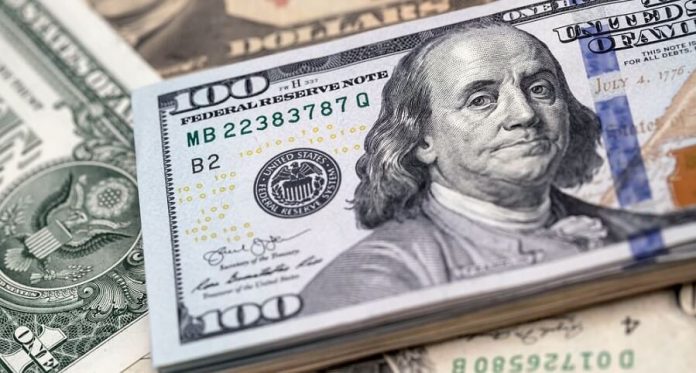
The current design $100 note is the latest denomination of US currency to be redesigned, and it was issued on October 8, 2013. It features additional security features, including a 3-D Security Ribbon and colour-shifting Bell in the Inkwell.
The $100 note also includes a portrait watermark of Benjamin Franklin that is visible from both sides of the note when held to light.
Each note includes security and design features unique to how the denomination is used in circulation.
The US government periodically redesigns Federal Reserve notes to make them easier to use, but more difficult to counterfeit.
It is US government policy that all designs of US currency remain legal tender, regardless of when they were issued. This policy includes all denominations of Federal Reserve notes from 1914 to date.


