
*Tinubu Orders Benin-Asaba Highway Reconstruction
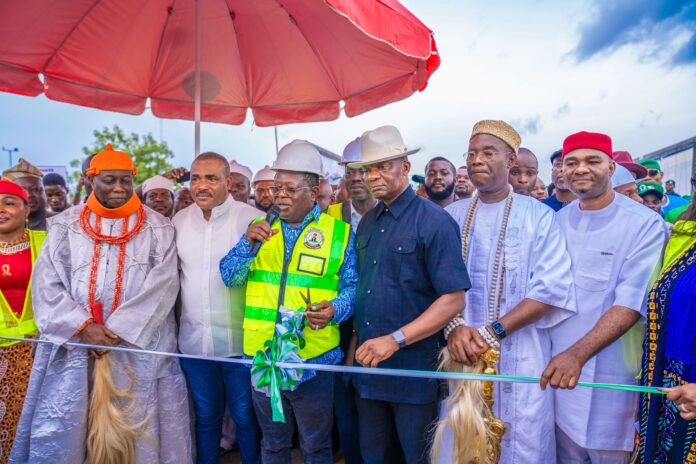
IT was a great relief for travellers, transporters and committed on Thursday, October 15, as the Federal Government reopened the First Niger Bridge, linking Asaba, Delta State, and Onitsha in Anambra State, to vehicular traffic, following extensive rehabilitation works to improve structural safety, strengthen security and restor seamless movement between the South-South and Southeast.
The reopening came about 38 days after it’s closure, forcing vehicles onward and outward Asaba and Onitsha to take the Second Niger Bridge before accessing the two border towns.
During the period, passengers, especially traders, were made to pay higher fares, while vehicles ownership lamented the extra mileage.
Speaking at the opening ceremony at Onitsha, Minister of Works, David Umahi, said the intervention was part of President Bola Tinubu’s commitment to maintaining critical national infrastructure and improving transportation across the country.
Umahi said the rehabilitation became necessary following reports of structural concerns, including alleged removal of bolts from the bridge’s steel components, inadequate maintenance and activities capable of undermining its structural integrity.
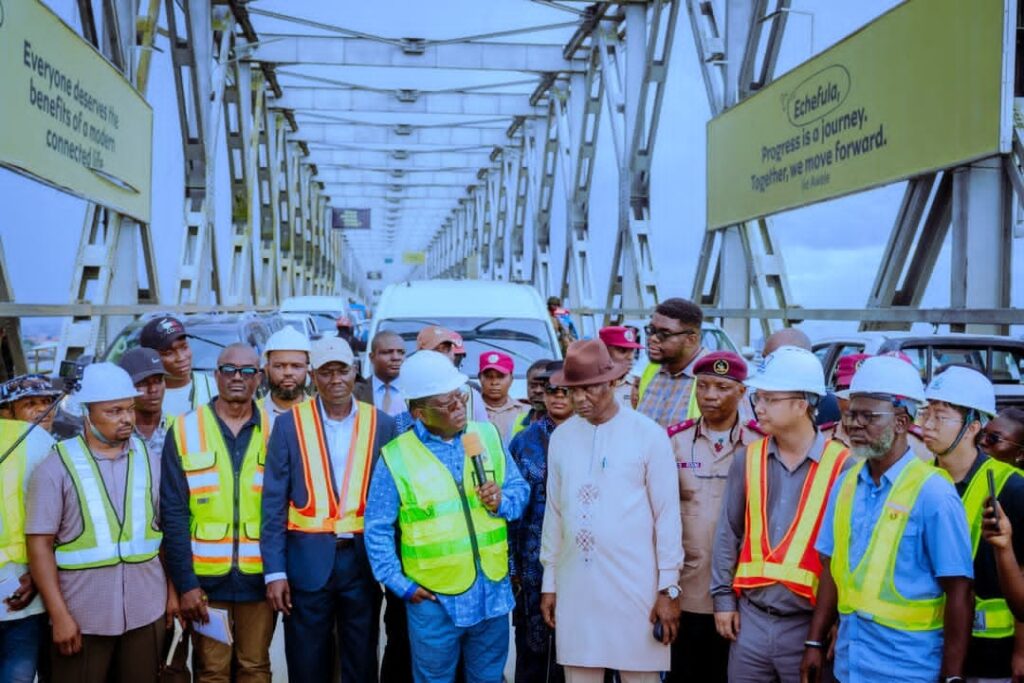
The minister explained that the Federal Government responded by undertaking repairs, installing solar-powered streetlights and Closed-Circuit Television (CCTV) cameras, improving the road surface and introducing traffic management measures to enhance safety.
He stated that the intervention also included installation of median barriers and creation of three designated turnaround points to facilitate traffic management during emergencies and vehicle breakdowns.
Umahi explained that security observation centres were being established at both ends of the bridge to enable continuous monitoring of activities on and beneath the structure, given the age of the bridge and the need to protect it against excessive loading, traffic congestion and other activities that could compromise its durability.
The minister warned against indiscriminate sand dredging around bridges, saying Federal Government regulations prohibit such activities within a 10-kilometre radius of its bridges.
He expressed concern that such activities were allegedly taking place dangerously close to the First Niger Bridge and directed relevant federal officials in Delta and Anambra states to ensure immediate enforcement of the restriction, warning that disciplinary measures would be taken against officials who failed to address the situation.
On deteriorating condition of the Benin-Asaba Expressway, the minister said the President had directed a comprehensive redesign of both highways ahead of its reconstruction, having cancelled an ongoing remedial contract covering the first 11 kilometres of the road due to dissatisfaction with the quality of work.
Umahi expressed confidence that the intervention would ameliorate the difficulties experienced by motorists and commuters along the busy corridor.
He announced plans for the reconstruction of approximately 400 kilometres of the East-West Road to serve as a spur of the 750-kilometre Lagos-Calabar Coastal Highway.
The minister reiterated the Federal Government’s commitment to completing major road projects across the Niger Delta and South-East, including sections of the Enugu-Onitsha Expressway and the ongoing 17.5-kilometre Second Niger Bridge bypass, valued at approximately N172billion.
He said the Federal Government would continue to prioritise infrastructure development, describing road connectivity as essential to economic growth, regional integration and national development.
In his remarks, Delta State Governor, Sheriff Oborevwori, represented by his Commissioner for Works (Rural Roads) and Public Information, Charles Aniagwu, commended Tinubu for responding promptly to concerns over the condition of the bridge.
Oborevwori said the intervention demonstrated the importance of establishing a sustainable maintenance culture for public infrastructure, rather than waiting for facilities to deteriorate before taking action.
The governor stated that the minister’s three consecutive visits to the bridge within two months underscored Federal Government’s attention to its rehabilitation, saying: “If this bridge is allowed to collapse, it will not just affect the movement of people between the South and the East; it will also affect the economies of both regions.”
Oborevwori said the rehabilitation went beyond improving the physical appearance of the bridge, but would enhance the safety of commuters, facilitate trade and strengthen connections among communities.
He expressed appreciation to Tinubu and Umahi for promptly addressing concerns about the bridge’s safety, describing the intervention as an example of responsive governance.
On his part, the Asagba of Asaba, Epiphany Azinge (SAN), described the rehabilitation as a significant intervention that would strengthen the bridge and extend its life span.
Azinge commended Tinubu and Umahi for ensuring the completion of the works, saying the bridge occupies an important place in the economic and social relationship between Delta and Anambra states, as well as the wider South-South and Southeast regions.


