
*Movement Kicks, Insists On Independence
THE National Leader of the Nigeria Democratic Congress (NDC), Seriake Dickson, has stressed that the party’s recognition of political support groups does not extend to allowing them to operate as parallel structures to the party.
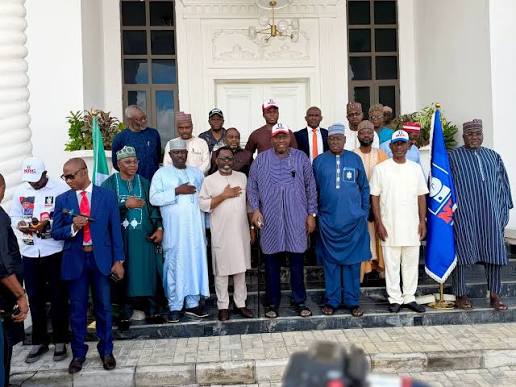
Speaking in Abuja on Tuesday, September 22, while receiving former Secretary to the Government of the Federation (SGF), Babachir Lawal, into the NDC, Dickson stressed that support groups backing the party’s presidential candidate, Peter Obi, and his running mate, Rabiu Kwankwaso, including the Obi-Kwankwaso (OK) Movement, have an important role in grassroots mobilisation, but insisted that they cannot assume the functions of the political party or its official campaign organisation.
His comments followed the controversy over the 59-member Presidential Campaign Council (PCC) announced by the OK Movement, which the NDC dissociated itself from, saying it was not authorised by it and should be disregarded.
Dickson, the senator representing Bayelsa West in the National Assembly, noted that the distinction between the party and support organisations was straightforward and are expected to provide grassroots mobilisation and promote the candidates, while working with the official campaign structure once constituted.
He said they should complement the NDC, rather than compete with it for political space or authority, adding: “Support groups don’t compete with the political party that is sponsoring candidates. Support groups don’t compete for supremacy, for space.”
He cautioned such groups against attacking or positioning themselves as critics of the political party whose candidates they support, saying the NDC has a structure for coordinating support groups and remained willing to work with the various organisations mobilising support for Obi and Kwankwaso.
He questioned the Movement’s decision to establish a PCC and urged those responsible for coordinating support groups to educate them on their roles, stating: “None of them will dare say they are setting up a presidential campaign council. It’s unheard of and nonsensical.”
The party has said Obi and Kwankwaso would nominate key officers of the council in consultation with the NDC leadership, including the director general, deputy director general (North), spokesman, deputy spokesman, head of New Media and finance officials.
OK Movement has, however, insisted that it was an independent political organisation, rather than an appendage of the NDC.
Its Director General, John Ughulu, said the Movement has its own structures at national, state, local government and ward levels and would retain control of them, noting that it supports Obi and Kwankwaso, but does not regard that political alignment as organisational subordination to the NDC or its appendage.
Ughulu, in a statement on Wednesday, September 23, said the argument about support groups had failed to properly distinguish the Obidient Movement and other support groups from the OK Movement, adding that the Movement comprised members from different political parties united by their support for Obi and Kwankwaso.
Ughulu stated: “For the avoidance of doubt, the OK Movement is an independent political organisation. It is not a support group created as an appendage of any political party or another movement,” and was independently organised and managed through its own established structures.
He stated that the political organisation has evolved beyond conventional party structures, arguing: “So, it is not nonsensical, as claimed by His Excellency Seriake Dickson.
“Rather, the national leader of the NDC should come to reality that politics has long evolved from the conventional political system he is used to.”
The Movement said it would continue to support Obi and Kwankwaso, while retaining control of its own organisational structures, and would not allow its national, state, local government and ward structures to be absorbed into the NDC or any other organisation.
It stated: “Our organisational structure remains the property and responsibility of the OK Movement. We will not surrender our established national, state, local government and ward structures to any political party or external support group for management.”
Ughulu, however, stressed that the Movement did not seek to challenge the NDC’s authority over its internal affairs, saying: “The OK Movement does not claim supremacy over the NDC, nor does it seek to usurp the constitutional powers of the party.
“Our cooperation with the NDC should, therefore, be understood as political collaboration, not organisational subordination.”
He explained that the Movement would continue to mobilise voters and campaign for the NDC candidates, while preserving its independent identity and internal structures.


