
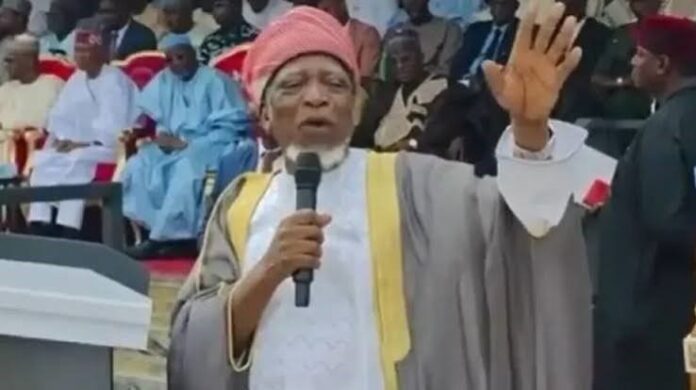
*Suleiman: Islam Is Not Jingir; He Is Just One Person
*Northern CAN Warns, Mindless Creature, Fires El-Buba
*Comment Could Hurt Tinubu In 2027, Fani-Kayode Cautions
*Comment Could Hurt Tinubu In 2027, Fani-Kayode Cautions
THE Chairman of the Christian Association of Nigeria (CAN) in the 19 northern states and the Federal Capital Territory (FCT), John Hayab, has condemned the use of the word, “infidel,” by extremist Islamic cleric, Yahya Jingir, in his comment supporting for the All Progressives Congress (APC) Muslim-Muslim presidential ticket, saying the reference is not only offensive, but also capable of deepening religious tension in the country.
Jingir had, in a controversial video online, urged Muslims to obtain their Permanent Voter Cards (PVCs) and vote for Muslim-Muslim tickets, saying the move would prove to “the infidels” that Muslims were the majority.
However, reacting to the statement on Monday, August 10, during a television interview, Hayab said Jingir’s comment was a reflection of the concerns Christians in northern Nigeria had raised over religious intolerance and alleged attempts at dominance.
Hayab said the statement was particularly disturbing because it was made in the presence of three governors, who were seen laughing during the gathering, adding: “The man did not say it in his room; he said it in the presence of three governors, and they were all smiling.
“This is an action that should have been rebuked instantly.”
Insisting that said the use of the word “infidel” against Christians was derogatory and could encourage hatred and violence against people of other faiths, Hayab noted: “Someone has the audacity to call me or every Christian an ‘infidel.’
“I wonder what he has been teaching his people all these years. You can see he has been teaching them hate and dislike for Christians.”
He, however, said Christians would continue to pursue dialogue and remain moderate, despite provocative statements, stressing that political support for a Muslim candidate was not the issue, adding: “We have always been tolerant. We have gone through worse statements. We have to be moderate and careful in public spaces.
“Honestly, if Jingir said, ‘let’s vote for our Muslim brothers to show we are strong,’ it would have been different, but adding ‘infidel’ makes it offensive.”
Hayab also called on the government to take action against inflammatory religious rhetoric, warning that allowing such statements to go unchecked could further undermine peace and unity.
“We must call out people like Jingir and the man in Kano who wants to sack every Christian. We must call them out so the government can act responsibly.”
In the same vein, Director of Research and Production, Ambassadors of Peace and Social Welfare Initiative, Ahmad Suleiman, while condemning Jingir’s statement, cautioned against using the remarks of one cleric to judge Muslims generally.
Suleiman, on the same television programme, said Jingir’s comments were contrary to Islamic teachings, particularly his reference to Christians as “infidels,” noting: “What he said is totally against Islamic teachings.
“The Quran does not like referring to the people of the book with insult; it describes that among Christians, you have very good people who are religious.
“Even if you want to campaign for a Muslim, campaign for him as a person, but do not campaign against a Christian. Christians and Muslims should not campaign against each other because of their religion. They should focus on qualities and actions.”
Citing Sections 10, 38 and 42 of the 1999 Constitution (as amended), Suleiman stated that Nigeria is a multi-religious country where citizens are entitled to freedom of religion and protected from discrimination on religious grounds.
He urged Nigerians not to equate Jingir’s comments with the position of Islam, as Muslim voices would reject such rhetoric, saying: “Islam is not Jingir; he is just one person among hundreds of millions.”
Suleiman, a professor, also charged political and religious leaders to focus on governance and service delivery, rather than exploiting religious sentiments for political gains, adding: “For every Jingir, there are ten responsible people who will talk responsibly.
“There are a lot of people like me. Don’t judge us by what a minority is doing.”
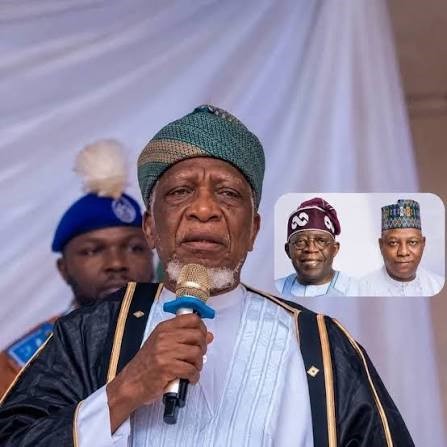
Meanwhile, the General Overseer of El-Buba Outreach Ministries, Isa El-Buba, accused Jingir of promoting religious division at a time when northern Nigeria is grappling with insecurity, poverty, banditry, drug abuse, criminality and displacement of communities.
El-Buba urged religious and political leaders to focus on bringing Nigerians together and finding solutions to the country’s challenges, instead of making statements capable of deepening religious tensions.
Noting that he was addressing Nigerians with a “very serious, heavy heart,” El-Buba stressed that leaders should begin to think about how Nigerians can live together peacefully, particularly as they grow older.
He stated: “I’m coming to every Nigerian with a very serious, heavy heart, because I thought that at this stage of our lives, especially when we’re getting older, we should begin to think about Nigeria and how we can all live together in peace.
“You called Christians infidels? You mindless creature! Are you not ashamed? Are you not ashamed that banditry is here in the north? Criminality is here in the north? It is here in the north you have the highest level of drug addicts.”
The clergyman said he had personally supported thousands of Muslims across northern Nigeria, despite having no family or personal relationship with many of them.
On his part, Nigeria’s Ambassador to South Africa, Femi Fani-Kayode (FFK), warned that Jingir’s outburst could undermine President Bola Tinubu’s re-election bid in 2027, as it risks alienating Christian voters, deepening religious divisions and providing opposition parties with a campaign issue they could deploy against the APC ahead of the elections.
The former Aviation minister, in a Facebook post, said Jingir’s comment had generated concern among Nigerians across religious lines, as he received over 100 calls and messages from Christians and Muslims following the statement.
Fani-Kayode stated that he was particularly disturbed by the reaction of the Kano State Governor, Abba Yusuf, whom he accused of openly cheering and celebrating Jingir’s position, adding: “There is only one thing worse, and that saddened me more than what he said, and that is to have seen my friend and brother, the Governor of Kano State, cheering him on and celebrating it.”
He warned political actors against turning religious identity into an instrument of political mobilisation, saying doing so could aggravate existing tensions and have consequences beyond the 2027 election.
He insisted: “We will not keep quiet and watch our faith being dragged all over the floor because of politics. Matters of faith and salvation are far more important than anything we see or get in this world.
“Politics and earthly power come and go, but faith and the afterlife is eternal. This divisive rhetoric has to stop and we should stop playing with fire.”
The envoy described Jingir’s comments as particularly ill-advised, given Nigeria’s sizeable Christian population and the international controversy surrounding allegations of religious persecution in the country, noting: “You do not talk like that in a country with over 120 million Christians.
“This is especially so when we are already being falsely accused of Christian genocide and of harbouring an agenda to Islamise the country and do away with all Christians by some of our American friends.”
He stressed that Jingir’s position was capable of inadvertently lending credibility to narratives that the government and its supporters have consistently rejected, while also weakening the ruling party’s electoral prospects.
According to him: “Jingir is not only feeding into that false narrative with his reckless words, but he is also endangering the chances of our candidates in the 2027 presidential election, because in order for us to win, we need BOTH Muslim AND Christian votes.
“What he has done is giving the opposition something to hold on to and use against us, and this is unfortunate.”
Governments at all levels have remained silent on the outburst, making many Nigerians to wonder whether or not the federal and other state governments, apart from the governors present at the event in Kano, where the comment was made, are in support of or indifferent to the divisive statements.


