
BY PROFESSOR STEVE AZAIKI
THE history of the Niger Delta is a narrative forged in the furnace of resilience, a story of a people whose lands yield the wealth of a nation but whose communities have long thirsted for the waters of justice and development.
In the heart of this struggle, between the mangroves of the creeks and the hallowed chambers of the National Assembly, emerged a figure whose life became a bridge between the aspirations of the grassroots and the mechanisms of national policy.
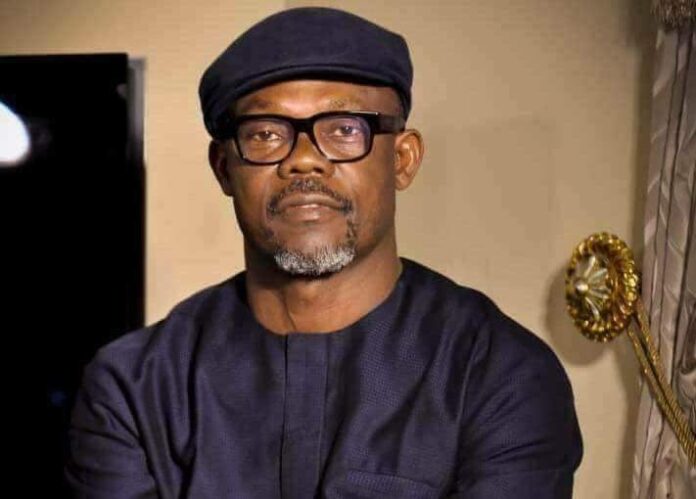
The passing of Senator Barinada Mpigi on February 19, this year, in London, has not only created a vacuum in the 10th Senate of the Federal Republic of Nigeria, but has also cast a long, sombre shadow across the ancestral plains of Ogoniland.
Mpigi was not merely a politician; he was a phenomenon of loyalty, a scholar of management and a royal scion who understood that the true measure of power is the service one renders to the least of their brethren.
His journey from the Gbene Lewagbeh Royal Family in Tai to the pinnacle of Nigerian legislative authority as chairman of the Senate Committee on Works is a testament to the transformative power of purposeful leadership.
The organisation of the final rites for Mpigi is a task of immense historical significance, reflecting the high esteem in which he was held by his peers and the nation.
Undisputedly, the funeral rites would be a gathering of the senator’s most trusted allies, colleagues and kinsmen, tasked with ensuring that his transition to the ancestral realm is marked by the dignity, honour and “calm strength” that defined his legislative service.
The reception of his remains at the Nnamdi Azikiwe International Airport in Abuja, attended by a cross-party delegation of senators and leaders, served as the opening movement of this national symphony of grief and gratitude.
Born on June 21, 1961, Mpigi was thrust into a world at the dawn of Nigeria’s independence, a period of immense hope and emerging structural complexity. His birth into the Gbene Lewagbeh Royal Family provided him with an inherent sense of responsibility to his community.
In Ogoniland, royalty is inextricably linked to the protection of the land and the preservation of its people’s dignity. This cultural DNA would later inform his fierce advocacy for environmental justice and resource control.
However, Mpigi recognised early that traditional authority must be augmented by modern intellectual rigor to navigate the complexities of a post-colonial state.
His academic trajectory was deliberate and focused on the science of management and education. The pursuit of a Doctor of Philosophy (Ph.D.) in Educational Management in 2012, long after he had attained political prominence, underscores his belief in lifelong learning as a tool for governance.
His professional tenure at Compagnie Générale de Géophysique (CGG), where he rose to become the Head of Operations in the Exploration Department, was a critical formative period. In the 1980s and 1990s, the exploration sector was the frontline of the interaction between global capital and the local environment.
Mpigi’s role in exploration gave him a granular understanding of the technicalities of the oil industry, knowledge he would later weaponise in the senate to chair committees investigating crude oil theft and environmental degradation.
He was one of the few legislators who could speak with authority on the mechanics of oil extraction, while simultaneously advocating for the rights of the host communities whose lands were being explored.
The political ascent of Mpigi began at the most vital level of governance: the local government area. As chairman of Tai Local Government, he established a blueprint for grassroots development that focused on immediate infrastructure and human security.
It was here that he cultivated the “consummate politician” persona as a leader who was accessible, empathetic and results-oriented.
His appointment as commissioner for Youth Affairs in Rivers State came during a volatile era in the Niger Delta’s history. The region was a tinderbox of restiveness, where years of marginalisation had pushed many young men toward militancy.
It was in this crucible that Mpigi demonstrated his innovative approach to conflict resolution through the “return arms for cash” policy. This policy was a sophisticated socio-economic intervention that recognised the economic desperation underpinning the insurgency.
By providing a financial off-ramp for militants to transition into civilian life, he significantly reduced the kinetic temperature of the state. This was a precursor to the National Amnesty Programme, proving that Mpigi was a thought leader in regional security long before the federal government adopted similar strategies.
The success of the “return arms for cash” policy had profound second-order effects. It restored a measure of confidence in the local economy, allowed for the resumption of educational activities in the rural areas and saved countless lives that would otherwise have been lost to the cycle of violence.
To Mpigi, youth empowerment was not a slogan; it was a security imperative and a moral obligation.
During our time together in the National Assembly, specifically during my tenure representing Yenagoa/Kolokuma/Opokuma Federal Constituency, I had the privilege of observing Mpigi’s legislative proactiveness from a close vantage point.
Our relationship was forged in the heat of committee rooms and the strategic sessions held in the late hours of the night, where the fate of the Niger Delta was often debated.
I remember vividly his commitment during the 2011-2019 legislative sessions, where he represented the Eleme/Tai/Oyigbo Federal Constituency. Mpigi was a man of action who had little patience for the bureaucratic inertia that often plagues the National Assembly.
When I sponsored the motion on the East-West Road expansion project in June 2020, a project whose delay had turned critical sections of our region into death traps, Mpigi was one of my most vocal allies in the legislative corridors.
Even when he moved to the senate, the synergy between us remained unbroken. He recognised that the East-West Road was more than a strip of asphalt; it was the economic lifeline of five states in the Niger Delta.
His proactiveness was most visible when addressing the inequities of oil politics, a subject I have written on extensively in my own academic and political work.
Whenever a motion arose concerning the degradation of the Ogoni environment or the funding of the Niger Delta Development Commission (NDDC), Mpigi was at the forefront, mobilizing support and ensuring that the voice of our region was not drowned out by national political expediency.
We shared a common belief that the patience of the neglected oil region should not be mistaken for weakness. His interventions were always firm, but constructive, reflecting a deep-seated patriotism balanced by a localised sense of justice.
Our personal experiences were not limited to the legislative floor, as we often discussed the necessity of institutionalising the developmental gains of the region.
It was during these private deliberations that the seeds for his advocacy for the Federal University of Environmental Technology were sown. He understood that for Ogoniland to truly heal, it needed more than just a clean-up; it needed a centre of intellectual excellence where the science of environmental remediation could be taught to the children of those who had suffered the most.
The election of Mpigi to the senate in 2019, representing the Rivers South-East, marked his transition from a regional champion to a national statesman. His tenure in the 9th and 10th Senates was defined by strategic leadership in committees that were central to the country’s economic survival.
As chairman of the Senate Committee on Works, Mpigi held one of the most demanding portfolios in the National Assembly. He approached this role with a calm strength, recognising that infrastructure is the bedrock of national integration.
His colleagues in the senate often remarked on his ability to scrutinise the 2026 National Budget as a “declaration of national intention,” ensuring that resources were directed toward the most critical arteries of commerce, such as the rehabilitation of the Port Harcourt-Aba Expressway and the ongoing works on the Second Niger Bridge.
However, perhaps his most courageous work was his leadership of the joint senate committee investigating crude oil theft. This was not a routine oversight function; it was a confrontation with some of the most powerful and opaque interests in the country.
Mpigi navigated this investigation with foresight, recognising that oil theft was not just an economic crime, but an existential threat to the Nigerian state. His ability to lead such a sensitive inquiry without compromising his integrity or his safety was a testament to his principled and dependable character.
To the Ogoni people, Mpigi was more than a legislator; he was a shield. Representing a district that includes Gokana, Khana, Tai and Eleme, the very heart of the Ogoni struggle, he was acutely aware of the historical burden he carried.
The shadow of Ken Saro-Wiwa and the ‘Ogoni Nine’ looms large over any leader from this region, and Mpigi spent his career attempting to translate the activism of the 1990s into tangible legislative victories.
The Federal University of Environmental Technology in Saakpenwa, Tai, stands as the most significant institutional legacy of his career. By guiding the legislative process for its establishment, Mpigi ensured that Ogoniland would move from being a site of humanitarian crisis and environmental deconstruction to a hub of scientific innovation.
This project reflects a third-order insight into his leadership: He understood that true remediation is not just about removing oil from the soil; it is about planting the seeds of knowledge in the minds of the people.
His support for the United Nations Environment Programme (UNEP) clean-up process was steadfast, yet he remained a vocal critic of the delays and bureaucratic bottlenecks that hampered its progress.
He recognised that for the Ogoni people to regain control of their destiny, the remediation of their land had to be accompanied by economic empowerment. This was the rationale behind his extensive scholarship and postgraduate grant programmes, which provided a lifeline for young Ogonis to compete on the national and global stage.
Mpigi was, above all else, a man of deep and abiding faith. This was not a faith of mere words, but one demonstrated through tangible acts of service to both humanity and the Almighty.
His spiritual devotion found its most enduring expression in the building and dedication of St. Cyprian Anglican Church, Koroma Parish, in the Diocese of Ogoni, Tai, Rivers State. This magnificent edifice, which he birthed from a place of personal conviction, now stands as a major community worship centre being a sanctuary for the weary and a beacon of hope for his people.
It is, therefore, only fitting that as part of the obsequies, in harmony with the desires of the Mpigi family, it is arranged for his body to lie in state within the hallowed walls of St. Cyprian.
There, amidst the prayers and hymns of the congregation he so dearly loved, the community will have the opportunity to pay their final respects to a man who understood that true leadership is a stewardship before God. His life’s trajectory, marked so clearly by divine grace, finds its spiritual culmination in the very parish he helped to establish.
In the fluid and often treacherous waters of Nigerian politics, Mpigi was an outlier as a man whose word was his bond.
His relationship with the Federal Capital Territory (FCT) Minister, Nyesom Wike, was the defining political alliance of his later years. This was not a relationship of convenience, but one of mutual respect and shared vision for the stability of Rivers State.
Wike’s tribute to Mpigi as a “strong pillar” who “stands with his friends through thick and thin” speaks to a political philosophy that is increasingly rare. Mpigi’s loyalty provided the political backbone for the “Renewed Hope” agenda in Rivers State, ensuring that the South-East Senatorial District remained a bastion of developmental continuity.
His role as secretary general of the Southern Senators Forum further extended this philosophy of consensus and loyalty to the regional level, where he worked to harmonise the interests of southern legislators on issues of national importance.
Even in the face of the protracted illness that eventually took his life, his focus remained on his duties to his constituents and his allies. The visits to his family in London by delegation after delegation of political leaders were not mere formalities; they were an acknowledgement of the central role he played in the political fabric of the nation.
The passing of Senator Barinada Mpigi at the age of 64 is a loss that defies easy articulation. As we lay him to rest, we are reminded of the words of John Donne, which I have often quoted in my own tributes: “Any man’s death diminishes me, because I am involved in mankind.”
But the death of a man like Mpigi diminishes us more profoundly, for he was a man of “real talent” that the world needs “more than heaven does.”
His legacy is etched in the road networks he oversaw, the university he founded, the students he educated and the peace he brokered in the creeks of Rivers State.
He was a “servant-leader” whose work spoke louder than any political rhetoric. For the Ogoni people, he was the fulfillment of a promise as a leader who did not forget the graves of his fathers or the future of his children.
As his burial gets underway, our resolve is to ensure that this “leading light” of Rivers State is honoured with a legacy that continues to inspire.
Mpigi has finished his course; he has fought the good fight of the Niger Delta struggle. He leaves behind his devoted wife, Mrs. Patricia Obiageri Mpigi, and five children, along with a nation that is better for his service.
May his soul find the rest that eluded him in his tireless pursuit of justice for the Niger Delta, and may his legacy remain evergreen in the hearts of all who believe in the promise of a greater Nigeria.


